 PickySprout
Starting a Balcony Herb Garden From Scratch
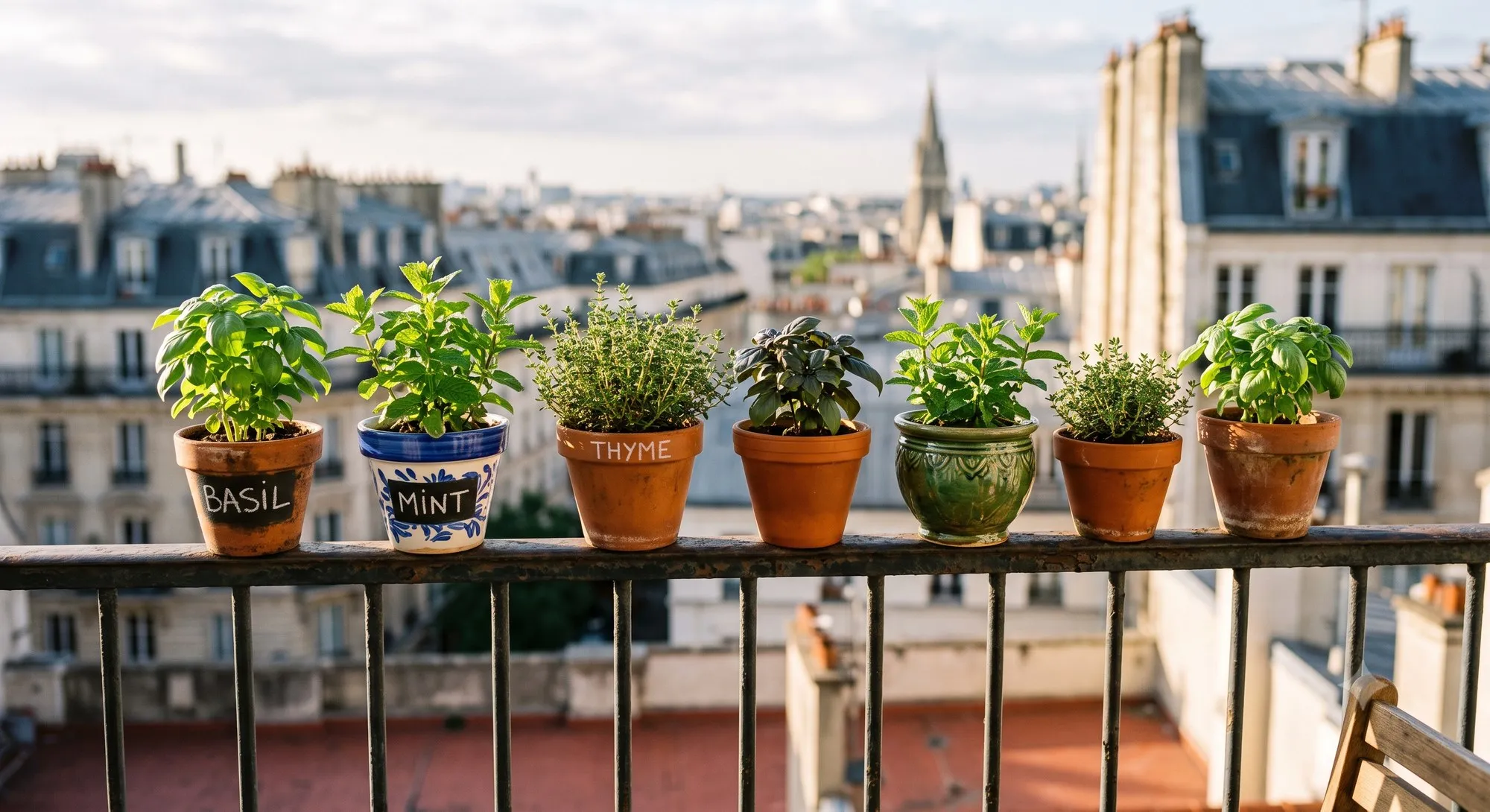
Not every herb is happy in a pot, and not every pot is happy next to every other pot. Some herbs, like mint, actually prefer containers — in open ground they spread through runners until they’ve taken over a bed, so confining them to a pot is doing everyone a favor. Others, like dill and cilantro, need deeper pots than you’d expect because of their taproots, and will bolt to seed early if their roots hit the bottom of a shallow container and get stressed.
Easiest herbs to start with
- Mint — nearly impossible to kill, but keep it in its own pot; it will crowd out anything sharing a container within a season
- Chives — tolerant of some shade, comes back reliably year after year, and the flowers are edible if you let a few go
- Basil — needs warmth and consistent watering, but grows fast enough that mistakes show up quickly instead of taking weeks to notice
- Thyme and rosemary — the opposite problem from basil: they’d rather be slightly underwatered than sitting in soggy soil, so don’t group them with thirsty herbs in the same tray
Grouping pots by thirst, not just by looks
The single most common mistake we see is arranging a balcony herb garden by how it looks rather than by watering needs. Mint and basil want consistently moist soil; rosemary and thyme want to dry out between waterings. Put a rosemary plant on the same watering schedule as a basil plant and one of them is going to suffer — usually the rosemary, which will develop root rot before you notice anything’s wrong, since the symptoms (yellowing, dropping needles) look a lot like normal seasonal shedding at first.
A simple watering routine
Check pots daily in summer, every two to three days in cooler weather. Herbs in small pots dry out quickly — there’s just not much soil mass to hold moisture — and inconsistent watering is the most common reason a balcony herb garden fails in its first month. If you’re prone to forgetting, terracotta pots are a decent built-in warning system: they visibly darken when moist and lighten as they dry, so a glance tells you more than it would with plastic.
Repotting as they grow
Most nursery herbs come in pots that are already a size too small for where they’re headed. Basil and mint especially will outgrow a 15cm starter pot within a few weeks of vigorous growth. Bump each plant up one container size when roots start showing through the drainage holes or circling the bottom of the pot — a sign the plant has run out of room before it starts visibly stalling.
Snip what you use regularly rather than letting herbs go untouched for weeks; most respond to light, frequent harvesting with bushier growth, while an unharvested plant tends to get leggy and flop over its own weight.
Feeding container herbs correctly
Potted herbs run out of nutrients faster than the same plant in open ground, since there’s a fixed, small volume of soil and every watering flushes some nutrients out the drainage holes. Feed most herbs with a diluted liquid fertilizer (half the labeled strength) every three to four weeks during active growth, and stop entirely in winter when growth slows to a crawl. Two exceptions worth knowing: rosemary and thyme actually produce better flavor when slightly underfed, so skip or halve their feeding compared to basil and mint; overfeeding Mediterranean herbs is a more common mistake than underfeeding them.
Common pests on balcony herbs
Aphids show up most often on new basil growth — small, soft-bodied, usually clustered on stem tips and the undersides of young leaves. A strong jet of water every couple of days, or a diluted insecticidal soap spray if water alone isn’t keeping up, controls most balcony aphid problems without needing anything stronger. Spider mites are the other frequent visitor, especially on rosemary and thyme in hot, dry conditions — look for fine webbing and stippled, dusty-looking leaves rather than the insect itself, which is easy to miss with the naked eye. Raising humidity slightly (grouping pots, or a light misting for non-Mediterranean herbs) makes balcony conditions less favorable for mites, which thrive specifically in hot, dry, still air.
Harvesting for drying and freezing
A thriving herb garden usually outpaces what you can use fresh, and preserving the surplus is worth doing rather than letting growth go to waste. Woody herbs (rosemary, thyme, oregano) air-dry well: tie small bundles and hang them somewhere dark and well-ventilated for one to two weeks, away from direct sun which fades both color and flavor. Soft, high-moisture herbs like basil and mint don’t dry cleanly — they tend to turn black and lose most of their flavor — and freeze far better instead; chop and pack into ice cube trays with a little water or olive oil for portioned, ready-to-use cubes through winter.
Propagating new plants from cuttings
Mint and basil both root readily from a healthy stem cutting placed in a glass of water on a bright windowsill — snip a 4-6 inch piece just below a leaf node, strip the lower leaves so none sit underwater, and change the water every couple of days to keep it from going stale. Roots typically appear within one to two weeks, at which point the cutting is ready to pot up in soil. It’s a free way to replace a plant that’s gone leggy or bolted, or to turn one good basil plant into several for different pots, without buying new seedlings each time.