 PickySprout
How to Grow Peppers on a Balcony
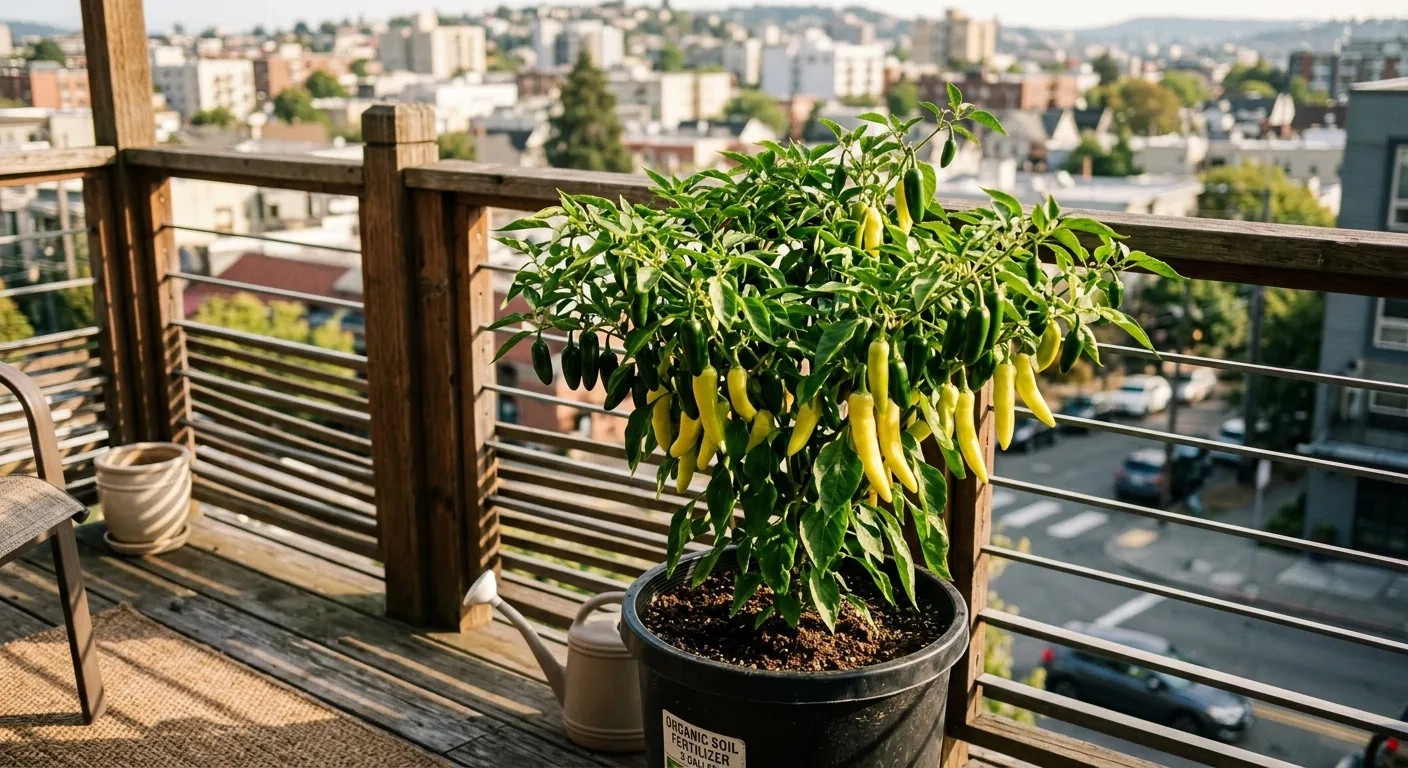
Peppers are one of the better balcony crops precisely because they stay compact — a single plant doesn’t sprawl the way a cucumber or squash vine does, and it keeps producing over a long season instead of one big harvest. The tradeoff is that peppers are fussier about consistency than tomatoes: uneven watering or a sudden cold snap will make a pepper plant drop its flowers before fruit ever forms, more readily than most other container vegetables.
Choosing a container
Give each plant at least a 5-gallon container — smaller pots dry out too fast and stunt growth long before the plant looks obviously stressed. Make sure whatever you use has real drainage holes; peppers are sensitive to both drying out and sitting in waterlogged soil, so there’s less margin for error than with more forgiving plants.
Picking varieties suited to containers
- Compact/patio varieties (often labeled “patio” or “container” on the seed packet) stay short and bushy, which matters more on a balcony than yield-per-plant does
- Jalapeños and banana peppers are reliably productive and tolerant of the slightly less consistent conditions a balcony offers compared to a garden bed
- Skip large bell pepper varieties unless your balcony gets full sun all day — they’re the least forgiving of the common options and need the most consistent heat and light to size up properly
Sun and watering
Peppers want 6-8 hours of direct sun; less than that and you’ll get a healthy-looking plant that produces little. Water when the top inch of soil is dry, and try to keep the schedule consistent rather than letting the pot swing between bone-dry and soaked — that swing is the single most common cause of flower and small-fruit drop on balcony peppers.
Common problems
- Flowers dropping before fruiting: usually inconsistent watering or a temperature swing (a cold night below ~55°F/13°C will do it)
- Blossom end rot (a dark, sunken spot on the fruit’s bottom): calcium uptake issue, almost always caused by inconsistent watering rather than an actual soil calcium deficiency — fix the watering schedule first
- Slow fruit set despite healthy flowers: peppers self-pollinate, but a sheltered balcony has less breeze to help move pollen than an open garden — a gentle shake of the plant every few days when it’s flowering can help