 PickySprout
Best Compact Pruning Shears for Balcony Gardens
Balcony gardens don’t need full-size loppers — most of what you’re cutting is soft new growth, thin stems, and the occasional dead leaf. Full-size garden shears are built for woody stems and thick canes; they’re overkill on a balcony and, worse, they’re clumsy in tight spaces where you’re working an arm’s length from your own face. A compact, precise pair of shears makes the actual job faster and reduces the risk of crushing stems instead of cleanly cutting them, which matters more than it sounds — a crushed stem heals slower and is a much easier entry point for disease than a clean cut.
What we looked for
- Blade length under 15cm, easy to store in a small planter box or kitchen drawer without needing dedicated garage space
- A locking mechanism so the shears are safe to store loose in a drawer with other tools, rather than needing a sheath
- A comfortable grip for repeated use — balcony deadheading and pinching tends to happen in short, frequent bursts rather than one long session
- Blades that hold an edge through a season of use; cheap stamped-steel blades dull within weeks and start tearing stems instead of cutting them
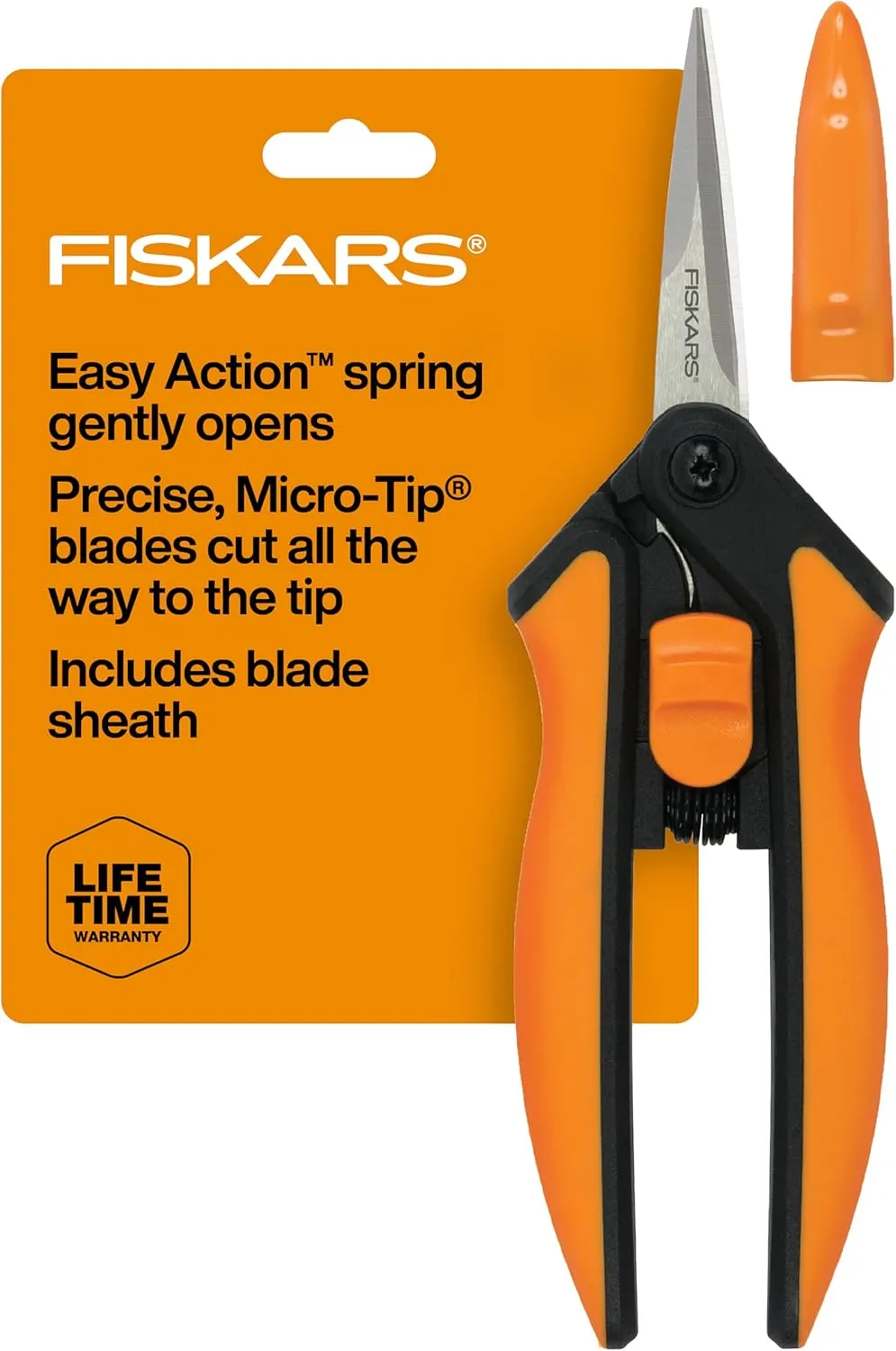
Our pick: Fiskars Micro-Tip Pruning Snip
Micro-tip snips are the right match for the criteria above: a compact blade for tight spaces, a locking mechanism for safe drawer storage, and a spring-action design that keeps repeated snipping comfortable. The Fiskars Micro-Tip Pruning Snip is a well-reviewed pick in this category, known for clean, precise cuts on thin stems without crushing them.
The one tradeoff: micro-tip blades are sized for pencil-thickness stems and thinner — if your balcony includes a young shrub or a woody herb that needs real pruning, you’ll still want a second, larger pair of bypass pruners for that job. For everything else — which, on most balconies, is nearly everything — a compact micro-tip pair like this covers the bulk of routine deadheading and pinching.
Micro-tip vs. bypass vs. anvil: what the terms actually mean
Micro-tip snips are a scaled-down bypass design — two curved blades that slide past each other like scissors, giving a clean cut on live, soft growth. Anvil-style pruners work differently: a single sharp blade closes onto a flat plate, which crushes slightly rather than slicing. That crushing action is fine on dead wood but noticeably worse on the soft, live stems most balcony pruning involves, since a crushed live stem heals slower and is more vulnerable to disease than a clean bypass cut. If a listing doesn’t specify which mechanism a pair uses, it’s worth checking before buying — the difference matters more on a balcony, where nearly everything you’re cutting is living tissue, than it would for someone mostly clearing dead brush.
Price tiers for compact pruners
Budget stamped-steel micro-tips typically run under $10 and are fine for occasional light use, but the thinner, less precisely ground blades dull within a season of regular deadheading and start tearing rather than cutting. Mid-range forged-steel models, usually in the $12-20 range, hold an edge substantially longer and are the sweet spot for anyone tending several balcony containers regularly. Premium options above that typically add replaceable blades or a titanium coating for rust resistance — worth it if you’re near the coast or water plants overhead where blades stay damp longer, less necessary otherwise.
Keeping them sharp and rust-free
A quick wipe with a dry cloth after each use, plus an occasional drop of household oil on the pivot point, keeps a pair cutting cleanly for years rather than months. Sap buildup on the blades is a common reason otherwise-good shears start tearing stems instead of slicing — a bit of rubbing alcohol on a cloth removes it more effectively than water alone.
Who should look at a different tool instead
If your balcony includes anything with stems thicker than a pencil — a young fruit tree, an overgrown rosemary bush gone woody, a climbing vine with real wood at the base — a micro-tip pair will struggle or damage the tool trying. A standard-size bypass pruner, sized for half-inch-plus branches, is the better match for that job even though it’s bulkier to store.