 PickySprout
How to Grow Cherry Tomatoes on a Balcony
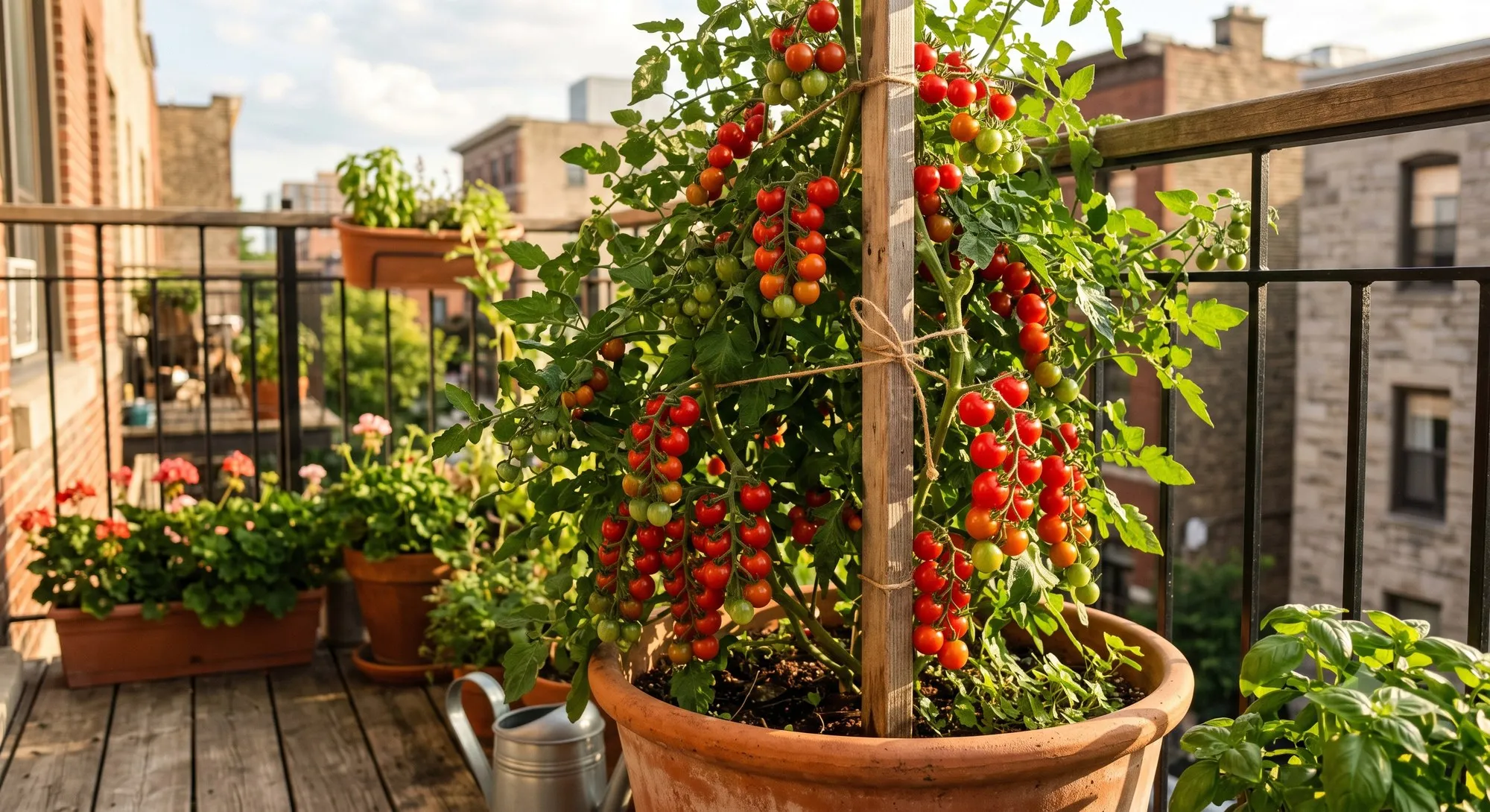
Cherry tomatoes are the one crop we recommend to almost every first-time balcony gardener who asks us where to start. They’re more forgiving than full-size tomatoes, they tolerate a bit of afternoon shade better than the seed packet will admit, and a single healthy plant can keep producing for months if you get the watering rhythm right. The bar for “worth growing” on a balcony is high — every pot is competing for the same few square feet — and cherry tomatoes clear it easily.
Picking a variety that actually suits containers
Not every cherry tomato is a container tomato. Look for anything labeled “patio,” “tumbling,” or “determinate” — varieties like Tumbling Tom or Patio Choice Yellow were bred to stay compact and stop growing at a manageable height. Indeterminate varieties (most heirloom cherry types) will happily grow six feet tall in a pot if you let them, which turns into a staking and wind-management problem you didn’t sign up for. If you’re not sure which type a seedling is, check the tag — it’ll say determinate or indeterminate somewhere in the fine print.
What you’ll need
- A container at least 30cm (12in) deep and equally wide, with real drainage holes — not just a decorative outer pot with none
- A sunny spot getting at least 6 hours of direct light; south- or west-facing balconies usually clear this easily, east-facing ones sometimes don’t
- A stake, small cage, or trellis clipped to the railing for support once the plant starts fruiting and gets top-heavy
- A saucer or tray underneath, both to catch runoff and to protect the deck below from stains
Planting steps
- Fill the container with a well-draining potting mix — not garden soil, which compacts hard in a pot and drains poorly.
- Plant the seedling slightly deeper than it sat in its nursery pot; tomatoes root along their buried stem, so a deeper start means a sturdier plant later.
- Water thoroughly right after planting, then place it in your sunniest spot and leave it alone for a few days to settle in.
- Add a stake once the plant reaches about 20cm tall, before it needs one — tying up a plant that’s already flopped over stresses the stems more than staking early.
The part that actually determines success: watering
Water consistently. Container plants dry out far faster than anything in the ground, especially once summer heat sets in and the plant is carrying a full load of fruit. A daily check is usually enough, but don’t just glance at the soil surface — push a finger in a couple centimeters, since the top can look dry while the root zone underneath is still damp. Inconsistent watering doesn’t just stress the plant, it’s the direct cause of blossom end rot and split fruit, which are the two complaints we hear most from new balcony tomato growers. A cheap trick that helps: water at the same time every day rather than “when it looks thirsty” — routine beats reaction here.
Feed every two weeks once flowering starts with a balanced liquid fertilizer; container soil runs out of nutrients much faster than garden beds since there’s less volume to draw from and every watering flushes a little more out the drainage holes.
Pollinating without much wind or bees
Tomato flowers are self-pollinating but rely on movement — wind or a visiting bee — to shake pollen loose inside the flower. A high balcony gets plenty of wind but sometimes too little bee traffic, and a sheltered one can have the opposite problem. If you notice flowers forming but fruit not setting after a week or two, give plants a gentle shake at the base every day or two, or run an electric toothbrush (turned on, held against the flower cluster for a second) to mimic the buzz-pollination effect bees provide. It takes thirty seconds a day and solves the great majority of “lots of flowers, no tomatoes” complaints.
Diagnosing common problems
- Blossom end rot (a dark, sunken patch on the fruit’s bottom) is almost always inconsistent watering, not a soil deficiency, even though it looks like a calcium problem — the plant can’t move calcium it has access to if watering swings between too dry and too wet. Fixing the watering routine solves it faster than adding a calcium supplement
- Cracked fruit happens when a dry spell is followed by a heavy watering or rain — the fruit’s interior swells faster than the skin can stretch. Consistent watering prevents this the same way it prevents blossom end rot
- Yellowing lower leaves with the rest of the plant looking healthy is usually just the plant redirecting energy to fruit and is not worth treating; yellowing that spreads upward through the whole plant instead points to overwatering or a nutrient deficiency
- Curling leaves in afternoon heat that flatten back out by evening is a normal heat-stress response, not disease — only worry if leaves stay curled overnight
Extending the harvest into fall
Once nights start cooling, tomato plants slow fruit set even though they’ll keep ripening what’s already on the vine. Pinch off new flower clusters about six weeks before your area’s first expected frost — the plant redirects that energy into ripening existing fruit instead of starting green tomatoes that won’t have time to mature. Any fruit still green at first frost can finish ripening indoors on a sunny windowsill, though the flavor is never quite as good as vine-ripened.