 PickySprout
Balcony Watering Schedule and Self-Watering Setups
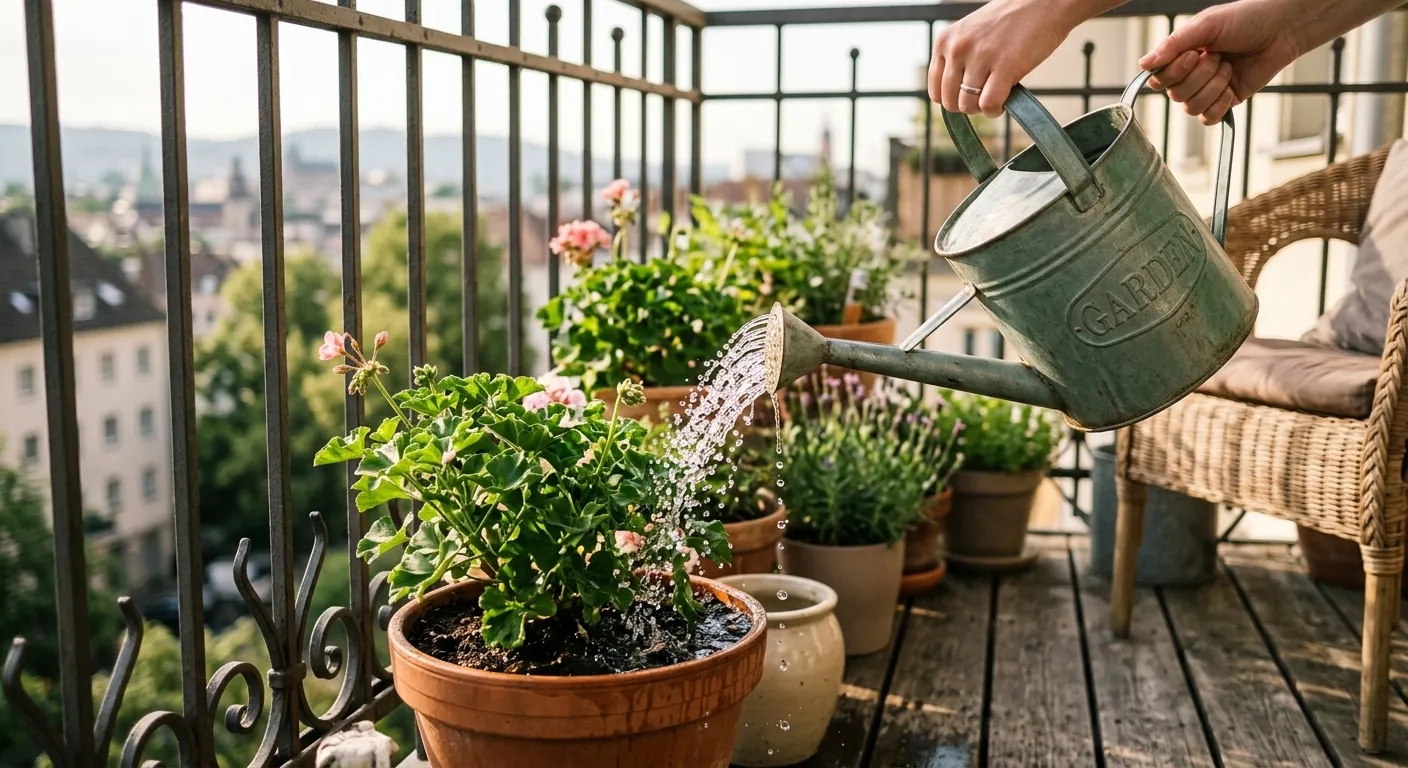
Balcony containers dry out faster than in-ground beds for two reasons most people underestimate: there’s less soil mass to hold moisture, and balconies tend to catch more sun-reflected heat and wind than a ground-level garden does. A watering routine built for a backyard bed will under-water balcony containers badly, which is why “water twice a week” advice so often fails on a balcony specifically.
Check the soil, not the calendar
Stick a finger about two inches into the soil before watering — if it’s dry at that depth, water; if it’s still damp, wait. This matters more than any fixed schedule because how fast a container dries out changes with the weather, the pot material (terracotta dries faster than plastic or glazed ceramic), and how root-bound the plant has become.
How to water once you do
Water slowly until it runs out the drainage holes, rather than a quick splash on top — a fast pour often just runs down the inside edge of the pot and out the bottom without actually soaking the root ball in the middle. On a hot, windy day, water in the early morning so the plant has moisture in reserve before the heat of the day pulls it out through the leaves.
When a self-watering container is worth it
Self-watering containers (a reservoir beneath the soil that wicks moisture up as needed) are worth the switch if you’re away often enough that missed waterings are a real risk, or if you’re consistently seeing the dry-out-and-wilt cycle even when watering daily. They’re less useful for plants that actually prefer to dry out between waterings (rosemary, thyme, most succulents) — a constant moisture supply can leave those roots sitting wetter than they want.
Adjusting through the season
- Peak summer: check daily, sometimes twice on the hottest days for small pots in full sun
- Spring/fall: every 2-3 days is often enough as growth slows and temperatures drop
- After repotting into a larger container: water more often for the first couple of weeks — a plant that hasn’t filled out the new soil with roots yet dries out unevenly around the edges