 PickySprout
How to Protect Balcony Container Plants From Wind
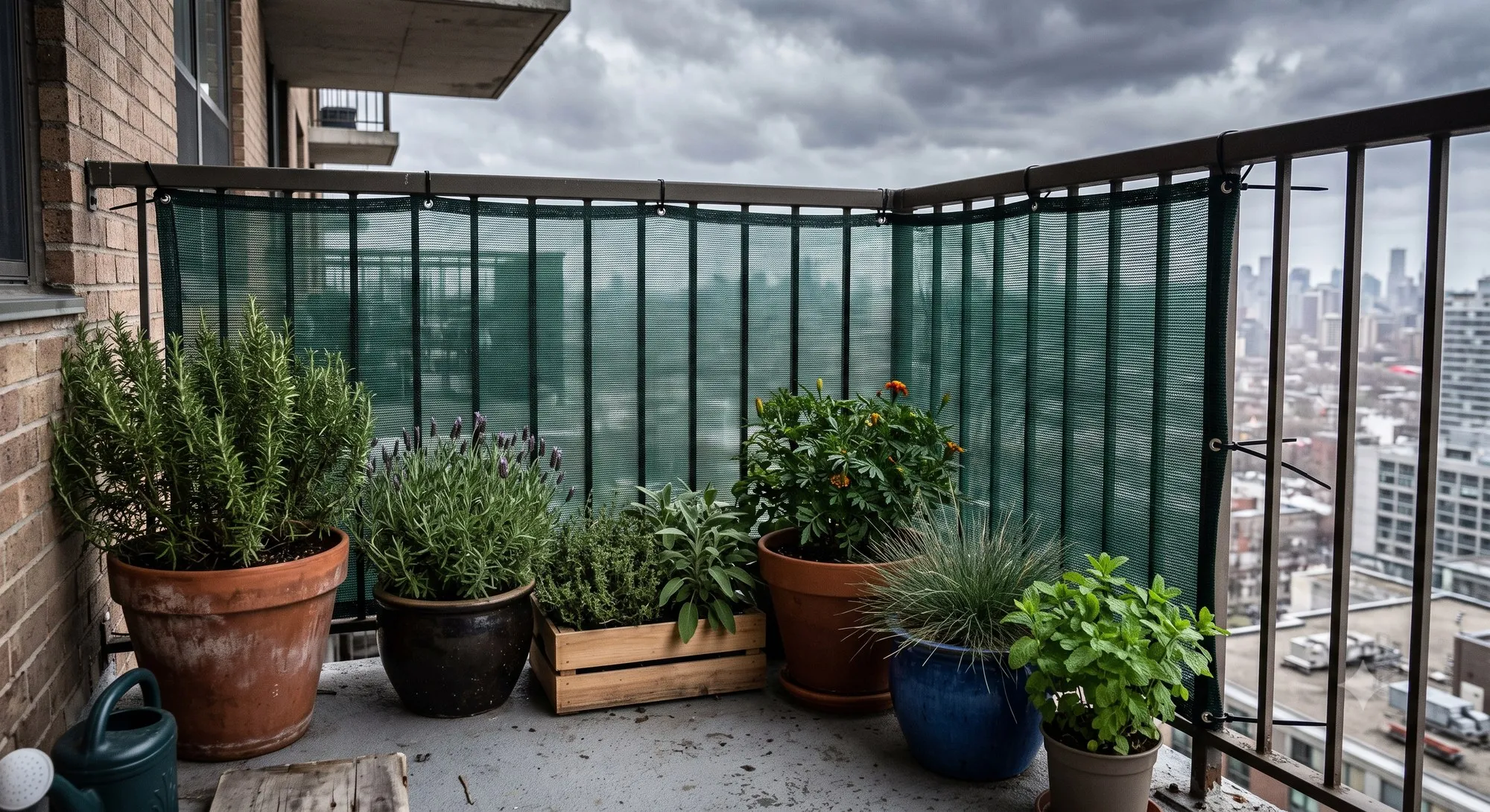
Wind is the balcony-specific problem that most general gardening advice skips entirely, because it barely applies at ground level. Higher floors catch stronger, more turbulent wind than the ground below — buildings funnel and accelerate airflow around corners and between towers, so a 6th-floor balcony can see gusts a backyard twenty feet away never experiences. If you’ve had a plant snap, a pot tip over, or leaves shred overnight with no obvious cause, wind is very likely the answer.
Signs wind is the real problem
- Torn or shredded leaf edges, especially on broad-leafed plants like basil or squash, with no pest damage visible
- A plant leaning consistently in one direction even when it’s getting even light from all sides
- Snapped stems near the base after a windy night, with no sign of pests or disease at the break point
- Soil drying out unusually fast — wind increases evaporation significantly beyond what sun exposure alone would cause
Choosing wind-tolerant plants
Some plants shrug off wind that would shred or snap others. Ornamental grasses, succulents, rosemary, and thyme all handle exposed, breezy balconies well — their leaf shape and growth habit are built for it. Broad-leafed, top-heavy plants (tomatoes, squash, dahlias) and anything tall and thin on a single stem take the most damage and need the most protection if your balcony is genuinely exposed.
Building a windbreak
You don’t need a solid wall — in fact a solid barrier often makes wind worse by creating turbulent eddies on the leeward side. A semi-permeable screen (lattice, a slatted panel, or a taut shade cloth) that lets roughly 50% of the wind through breaks its force while avoiding that turbulence. Mount it on the windward side of your most exposed plants, tall enough to cover the plant’s full height, and expect to adjust its position if you notice the wind is now coming from an angle the screen doesn’t cover.
Keeping pots from tipping
- Choose wider, heavier pots over tall narrow ones for anything exposed to real wind — a low center of gravity resists tipping far better than a tall pot does, regardless of weight
- Add weight low in the pot (a layer of gravel at the base, under the potting mix) rather than relying on the plant’s own weight to keep it grounded
- Stake top-heavy plants earlier than you would in a sheltered garden, and check ties after any notably windy night — a tie that held fine in calm weather can work loose fast in sustained gusts
- Group pots close together where possible; a cluster of containers shelters each other far better than the same pots spread out individually along a railing
When to just bring plants in
If a serious storm is forecast, don’t try to wind-proof in place — move what you can indoors or against the most sheltered interior wall of the balcony for the night. It’s a five-minute task that avoids the hours of cleanup (and the cost of a broken pot or a snapped plant) that follow a storm you didn’t prepare for.
How much wind is actually a problem
Most plants tolerate sustained breezes up to roughly 15-20 mph without real damage — what causes the leaf shredding and snapped stems is gusts well above that, or wind that’s constant rather than intermittent, since a plant that never gets a calm stretch to recover ends up more stressed than one that takes a hard gust followed by hours of stillness. If your balcony regularly sees sustained wind in that range or higher (many weather apps report sustained speed separately from gusts, worth checking specifically for your building’s exposure), plan windbreaks and plant selection around the higher figure, not the neighborhood average — building height and corner position can push a specific balcony’s actual wind well past what ground-level forecasts suggest.
Wind stress you can’t see
Beyond visible damage, constant wind dries plants out faster than watering alone can keep up with, and it also increases a plant’s water demand at the leaf surface (transpiration) at the same time it’s drying the soil faster — a double effect that’s easy to misread as a watering problem when it’s really a wind problem. If a plant in an exposed spot needs watering noticeably more often than the same plant would in a sheltered spot, wind is very likely the reason, and a windbreak will do more for it long-term than watering more frequently will.
Repairing damage after a bad wind event
A snapped stem below any leaf nodes usually means that stem is done — cut it cleanly just above the break rather than leaving a ragged, torn end, which heals slower and invites disease. A stem snapped above at least one healthy leaf node can sometimes be salvaged by staking it upright and giving it a few weeks; if it doesn’t show new growth from that node within two to three weeks, remove it and let the plant redirect energy elsewhere. Shredded leaves rarely need to be removed purely for the plant’s health — a damaged leaf still photosynthesizes — but trimming the worst of them improves airflow and reduces an entry point for disease if the tears are extensive.