 PickySprout
Companion Planting for Patio Container Gardens
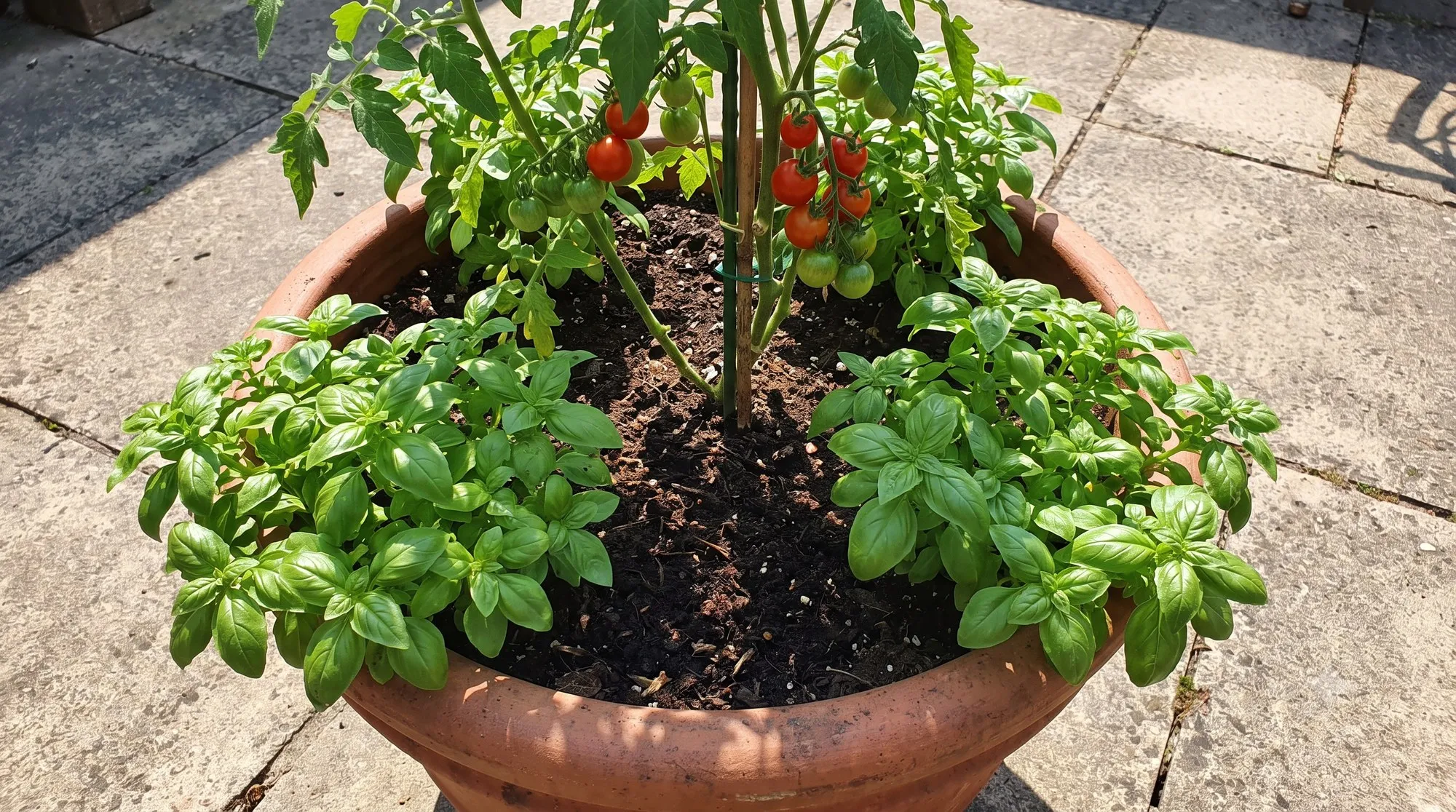
Companion planting gets treated as garden folklore more often than it deserves — some pairings genuinely help (shared pest deterrence, efficient use of space, one plant improving soil conditions for another), while others are closer to superstition. In containers specifically, the stakes are a little different than in an open bed: everything sharing a pot is also sharing a fixed, limited volume of soil, water, and nutrients, so a “companion” that competes too hard for the same resources can do more harm than the pest-deterrence benefit is worth.
Pairings worth using
- Tomatoes and basil — the classic pairing, and one of the few where the folklore and the practical benefit line up. Basil’s scent is believed to help repel some pest insects that target tomatoes, and both plants want similar water and light, so they don’t fight each other for different conditions the way mismatched companions do
- Marigolds with almost anything — marigolds repel some soil nematodes and above-ground pests, take up little root space, and tolerate being slightly under-resourced better than most vegetables, making them a low-risk addition to a mixed container
- Lettuce under taller plants — lettuce prefers a bit of afternoon shade in warm weather, so tucking it at the base of a taller tomato or pepper plant uses vertical space efficiently and can actually extend lettuce’s productive window before it bolts
- Chives near roses or other pest-prone ornamentals — chives are believed to help deter aphids, and their compact size means they don’t compete meaningfully for space in a shared container
Pairings to avoid in containers
- Tomatoes and potatoes together — beyond any folklore concern, they share the same disease vulnerabilities (early and late blight especially), and cramming both into a shared, limited soil volume raises the odds one infects the other
- Fennel with almost any vegetable — fennel releases compounds that inhibit the growth of many neighboring plants, one of the few companion-planting “avoid” rules with solid backing; grow it alone
- Two heavy feeders in one container — a tomato and a squash sharing a pot isn’t a folklore problem so much as a math problem: neither gets enough of the container’s finite nutrients and water, and both underperform compared to being grown separately
Sizing the container for a companion pairing
A companion pairing needs more soil volume than either plant would use alone, not the same volume split between them — a common mistake is treating “two plants, one pot” as free. As a rule of thumb, use a container at least 50% larger than you’d use for the larger plant on its own, and expect to feed and water it more attentively than a single-plant container of the same size, since more roots are drawing from the same reservoir.
Watching for competition, not just cooperation
Even a “good” pairing can go wrong if one plant outgrows and shades the other faster than expected. Check in on paired containers more often than single-plant ones during the first few weeks — if one plant is clearly winning the light and space, it’s easier to intervene (thin, prune, or move one to its own pot) early than after several weeks of one plant stunting the other.
Timing matters as much as the pairing
Planting both companions at the same maturity stage usually works better than mixing a mature transplant with a seed — the transplant’s established roots outcompete a newly germinating seed for the same finite soil volume before it ever has a fair chance. For pairings like lettuce under tomatoes, start the lettuce a couple of weeks after the tomato is established and already casting some shade, rather than together from day one, so the lettuce gets the partial shade it actually wants instead of competing head-on with a seedling tomato for full sun.
Herbs as companions, not just crops
Basil, chives, and marigolds do double duty in a container garden: they’re worth growing for their own sake, and their scent is believed to disrupt the way many pest insects locate host plants by smell — planting them scattered through a mixed container rather than in their own separate pot gets more of that benefit than isolating them would. Rotate which herb you scatter through different containers season to season along with your main crops, for the same reason you’d rotate crop families — a pest population that’s adapted to one recurring scent pattern is slower to adapt if the pattern changes.
Signs a pairing isn’t working
If growth on one plant noticeably slows within the first month while its companion thrives, don’t wait out the season hoping it corrects itself — container conditions rarely self-correct the way an open bed sometimes can, since there’s no extra soil volume for roots to find on their own. Separate the struggling plant into its own pot as soon as you notice the gap widening; a plant moved early usually recovers within a couple of weeks, while one left competing for a full season often stays stunted even after the competition is removed.