 PickySprout
Best Hand Trowels for Patio Container Gardening
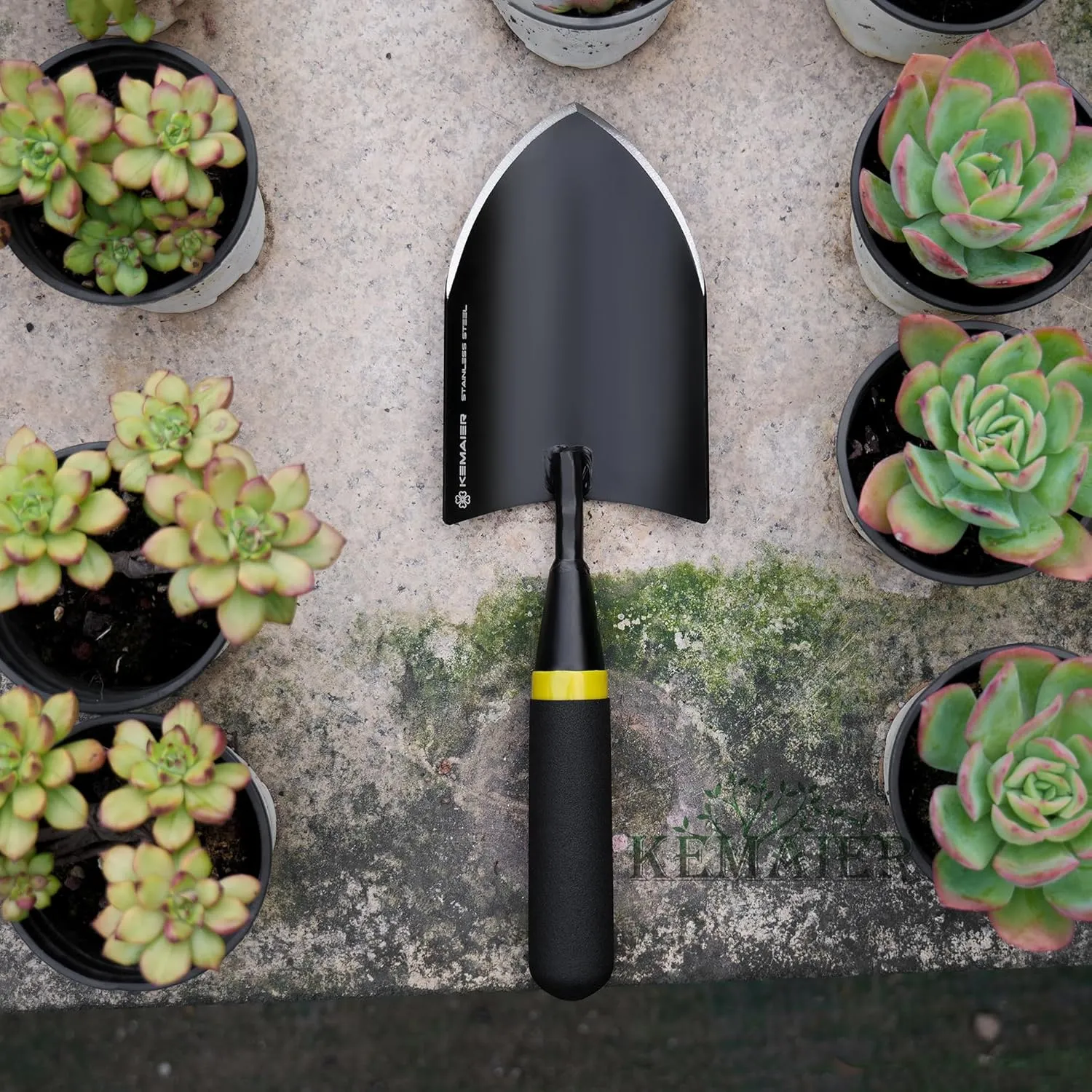
Deep patio containers need a trowel with a bit more reach than a balcony-sized pot does. A short-handled trowel that’s perfect for a window box will leave you scraping your knuckles on the rim of a 20-inch planter, and you’ll end up either buying a second trowel anyway or working at an awkward angle that turns a five-minute repotting job into an annoying one.
What we looked for
- Blade length long enough to reach the bottom of a deep container without your hand disappearing past the rim
- A stainless finish that won’t rust after repeated watering and soil contact — carbon steel trowels look great on day one and spot with rust within a month of real use
- A grip that stays comfortable through a full session of repotting several containers back to back, not just a single scoop
- Volume markings or a reasonably wide blade, useful shorthand when a recipe of soil amendments calls for “two trowels of compost” rather than a precise measurement
Our pick: Stainless Steel Hand Trowel
For deep patio containers, look for a full-length stainless-steel trowel with a rubberized grip and volume markings on the blade. Stainless steel resists rust and pitting far better than carbon steel after repeated watering and soil contact, and a longer blade reaches the bottom of a 15-20 gallon container without your hand disappearing past the rim.
It’s usually not the cheapest trowel on the shelf, but a stainless trowel with a comfortable grip tends to stay in rotation for years instead of rusting or bending within a season — for a tool you’ll use every week of the growing season, that durability is worth the extra upfront cost.
Comparing blade materials
Carbon steel takes and holds a sharp edge well, useful for a trowel that’s also doing light cutting through roots or compacted soil, but it needs drying and occasional oiling to avoid rust — a real maintenance commitment for a tool that’s usually left outside within reach of a patio. Stainless steel sacrifices a little edge retention for much better corrosion resistance with no upkeep required, which suits the realistic way most people actually store a hand trowel. Aluminum trowels are the lightest option and won’t rust at all, but they flex and can bend under real resistance in dense or root-bound container soil, making them a better fit for light potting-mix work than for anything approaching compacted ground.
Blade shape and what it’s suited for
A narrow, pointed blade digs and works into tight spaces well but moves less volume per scoop, meaning more repetitions for a job like filling a large container. A wider, rounder blade moves more soil per pass and suits bulk scooping — filling pots, mixing amendments — better than precision digging around existing root balls. For deep patio containers specifically, blade length matters more than blade width, since the main problem to solve is reach to the bottom of the pot rather than volume per scoop.
Grip styles
A straight, cylindrical wooden or rubber handle is simple and durable but can dig into the palm during a long repotting session. An ergonomic, contoured grip spreads pressure more evenly across the hand and reduces fatigue over repeated use, at a modest price premium. Anyone doing occasional light scooping likely won’t notice much difference between the two; anyone repotting several large containers in one sitting will feel the difference by the end of the session.
Price tiers
Basic stamped-steel trowels run under $8 and are fine for occasional, light use, but the thinner metal bends under real resistance and the finish typically spots with rust within weeks. Mid-range stainless trowels with a rubberized grip, in the $10-18 range, cover the vast majority of patio container needs without excess cost. Premium forged-steel or one-piece designs above that price point add long-term durability that mostly matters for daily professional use rather than a home patio garden watered and tended a few times a week.