 PickySprout
How to Plant a Pollinator Garden on a Patio
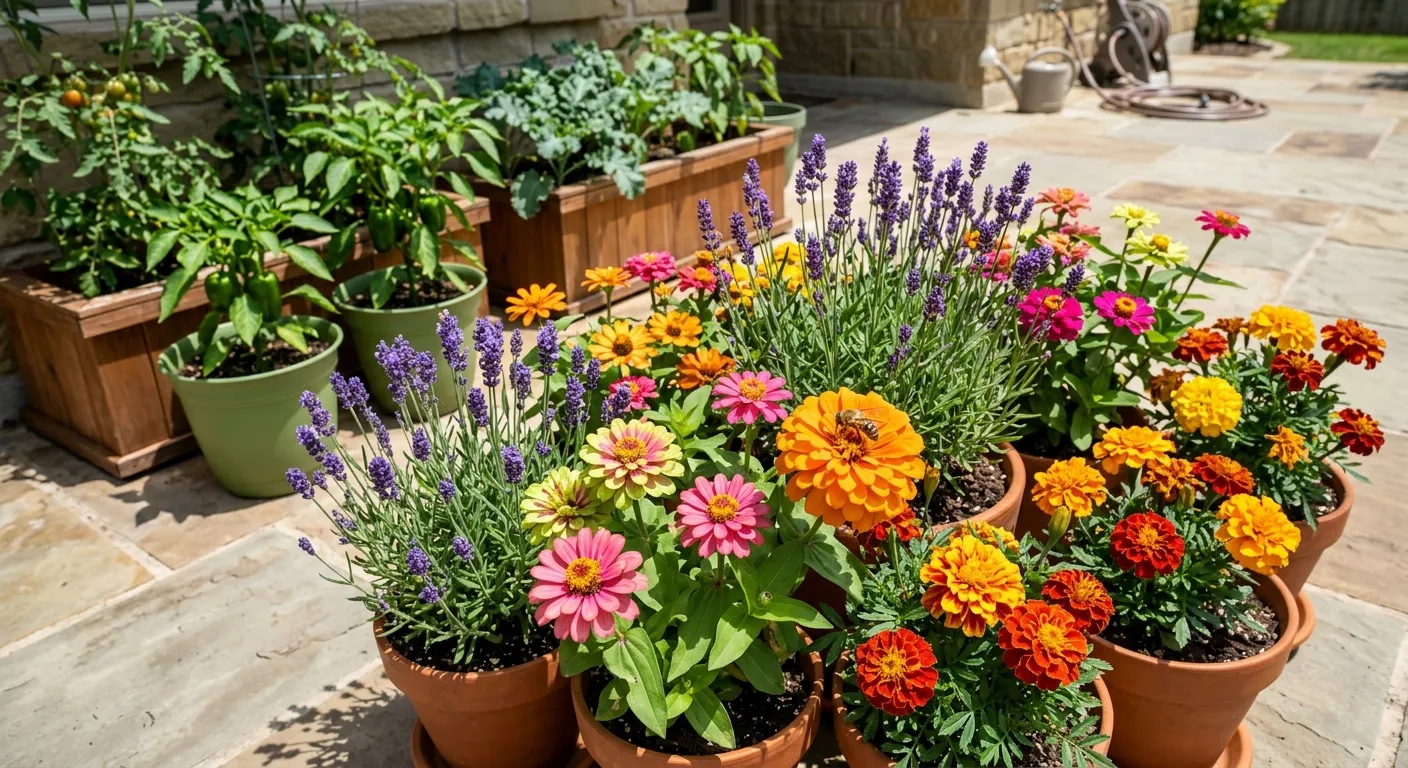
A patio vegetable garden that never sees a bee will underperform one that does — tomatoes, squash, and cucumbers all set more fruit with more pollinator visits. Planting a few pollinator-friendly containers alongside your vegetables isn’t just decorative; it’s one of the more reliable ways to boost yield without changing anything about how you grow the vegetables themselves.
Flowers and herbs that actually pull pollinators in
- Lavender: long bloom window, heavily visited by bees, and tough enough to tolerate the drier side of inconsistent patio watering
- Zinnias: fast from seed, bloom all summer, and butterflies favor them over most other annuals
- Marigolds: reliable bloomers that double as a mild pest deterrent for nearby vegetables
- Borage: less common but a genuine bee magnet, and the flowers are edible if you want to use them
- Alyssum: low and spreading, good for tucking into the edges of vegetable containers rather than needing its own pot
Where to put them
Cluster pollinator containers within a few feet of the vegetables you want pollinated, rather than scattering them around the edges of the patio — pollinators work an area more thoroughly when the flowers and target plants are close together. Most of the plants above want the same 6+ hours of sun your vegetables already need, so they can usually share the same sunny corner without competing for a different spot.
A few things that help beyond just planting flowers
- Skip pesticides on or near the pollinator containers entirely, including “organic” ones like pyrethrin — they don’t discriminate between pests and pollinators
- A shallow dish of water with a few pebbles (so insects have something to land on) gives pollinators a place to drink without risking drowning in a deep birdbath
- Let a few herbs bolt and flower on purpose — basil, cilantro, and dill flowers are all attractive to pollinators, and one bolted plant left in place can do more for pollinator traffic than a dedicated flower pot