 PickySprout
How to Grow a Salad Garden in Patio Containers
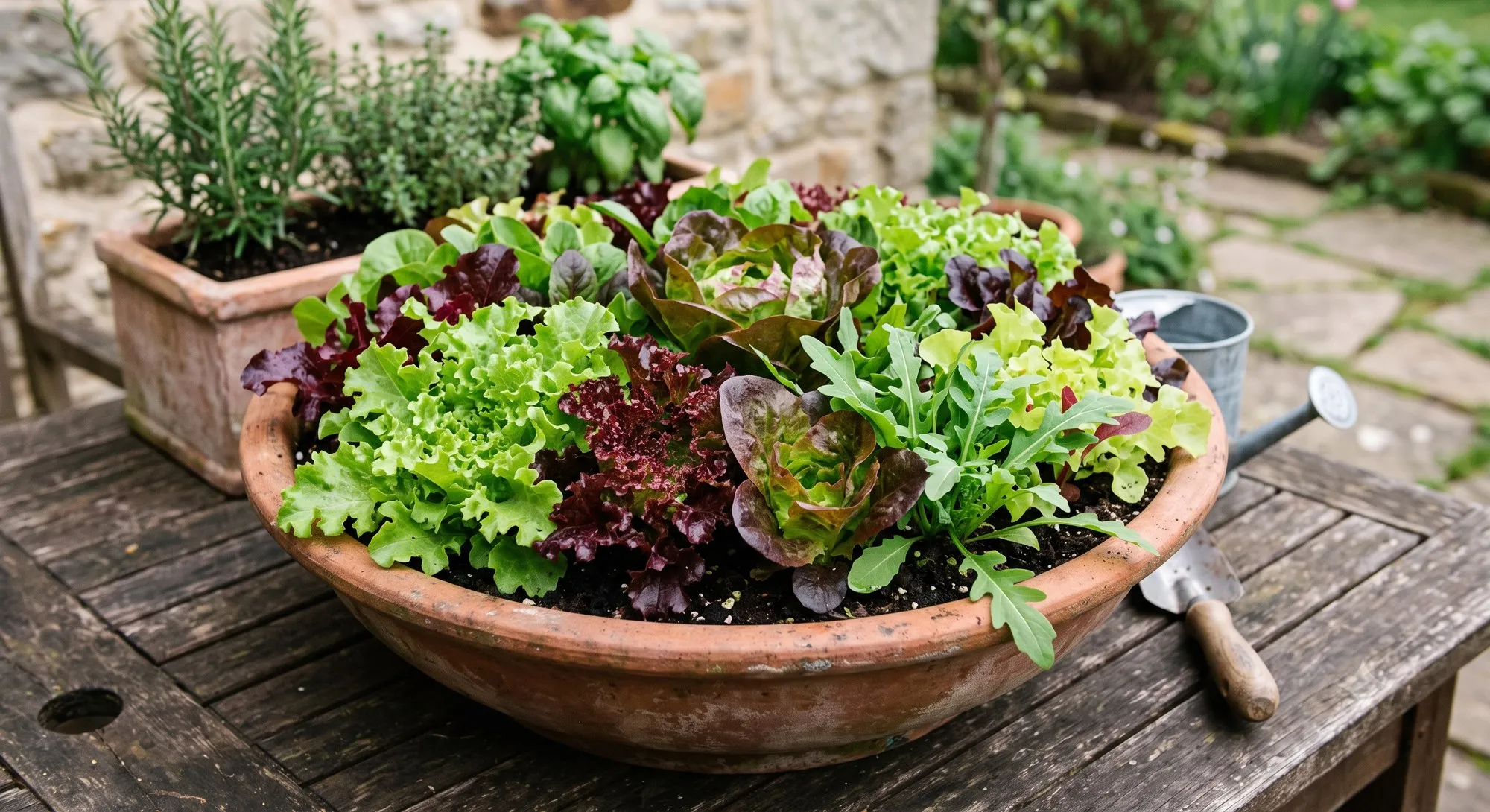
A salad garden is the fastest payoff crop you can grow on a patio — loose-leaf lettuce is ready to start harvesting in as little as three to four weeks, versus months for most fruiting vegetables, and it keeps producing for weeks after that first cut if you harvest it the right way. It’s also one of the most forgiving container crops going: shallow roots mean you don’t need the deep soil volume a tomato demands, which makes it a good fit for containers you might otherwise consider too shallow to be useful.
Choosing containers
Salad greens only need 6-8 inches of soil depth, far less than most vegetables — a shallow, wide container actually suits them better than a deep, narrow one, since it maximizes the growing surface area for the space you have. Window boxes, wide bowl-shaped planters, and even repurposed shallow storage bins with drainage holes added all work well.
What to plant
A real salad garden is a mix, not a monoculture — different textures and flavors from a single container, harvested together:
- Loose-leaf lettuce varieties (not head lettuce, which doesn’t regrow after cutting) — these are the backbone of a cut-and-come-again bed
- Arugula for peppery bite, one of the fastest-growing salad greens and among the most heat-tolerant before bolting
- Spinach for cooler weather — it bolts fast once temperatures climb, so plan it for spring and fall rather than peak summer
- Mustard greens or mizuna for variety and a bit more cold tolerance than lettuce alone
Mix seed rather than growing single-variety blocks; a scattered mix reads visually more like a real salad bowl and tends to fill in more evenly than neat rows in a small container.
The cut-and-come-again technique
This is the technique that makes a salad garden worth growing over buying bagged greens: harvest by cutting leaves an inch or two above the soil line, taking only what you need, rather than pulling whole plants. Left with enough leaf base and roots intact, most loose-leaf greens regrow a fresh flush within a week or two, and a single planting can be harvested this way six to eight times before it’s spent. Pulling whole plants for each meal — treating it like a one-shot harvest — throws away most of that regrowth potential.
Succession planting for a continuous supply
Because loose-leaf greens grow fast and bolt (go to seed and turn bitter) within a few weeks in warm weather, sow a small new batch of seed every two to three weeks rather than one large planting. This staggers maturity so you’re never facing an all-at-once glut followed by a gap — a smaller, continuous container of greens usually serves a household better than one big flush that outpaces what you can eat before it bolts.
Keeping it from bolting early
Heat is the main trigger for bolting. In peak summer, a spot with morning sun and afternoon shade extends a salad container’s productive window considerably compared to one baking in full sun all day — the opposite of what most other patio vegetables want, and worth planning for separately if your patio’s shadiest corner is otherwise underused.
Feeding a salad container
Salad greens are light feeders compared to fruiting vegetables, but a shallow container still runs out of nutrients faster than the same plants in open ground. A diluted liquid fertilizer every two weeks during active growth is usually enough — overfeeding leafy greens with a high-nitrogen formula can actually push soft, fast growth that’s more prone to wilting and pest damage, so resist the urge to feed heavily just because growth looks slow. If leaves are pale and growth has genuinely stalled despite regular watering, that’s the sign to feed, not a fixed schedule alone.
Dealing with bitter or tough leaves
Bitterness almost always traces back to heat stress or the plant starting to bolt, not the variety itself — once a lettuce plant sends up a central flower stalk, the leaves around it turn bitter within days as the plant redirects energy into seed production. Harvesting consistently and keeping the container out of peak afternoon heat both delay this. Tough, fibrous leaves usually mean the planting has simply gone too long between harvests; frequent cutting keeps regrowth tender, while an unharvested planting matures past its best texture even if it hasn’t bolted yet.
Common pests in a salad container
Slugs and snails are the most persistent problem for anything this tender, especially on a patio with nearby mulch or damp hiding spots — check under the container’s rim and saucer in the early morning, when they’re still active, rather than only looking at the leaves during the day when they’ve retreated. Aphids show up less often on salad greens than on other vegetables, but a strong water spray handles small infestations before they need anything stronger. Floating row cover laid loosely over the container is a low-effort way to exclude both pests without needing to spot-treat constantly, and it doubles as light shade during the hottest part of summer.