 PickySprout
How to Start Composting in a Small Yard
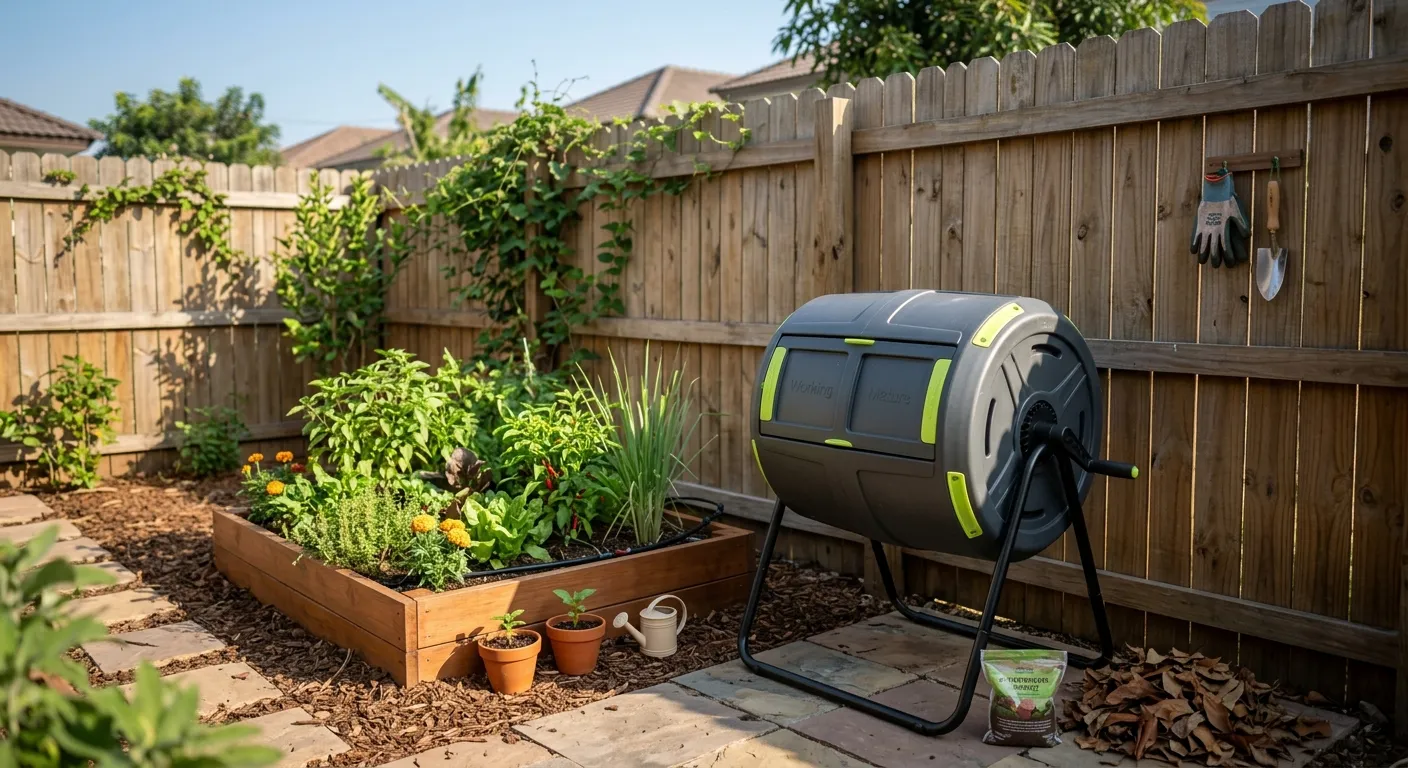
A small yard doesn’t have room for the sprawling three-bin composting setup you’ll see recommended for bigger properties, but it doesn’t need one either — a compact system can turn out just as much usable compost for the smaller amount of garden you’re feeding it.
Pick a system sized to your space
- Tumbler composter: fully enclosed, turns with a crank instead of a pitchfork, and keeps a tidier profile than an open pile — the best fit for a small yard where the compost setup sits close to the house or a shared fence line
- Single compact bin: cheaper than a tumbler and still contained, though you’ll turn it by hand with a pitchfork or aerator tool periodically
- Trench composting: no visible bin at all — bury kitchen scraps directly in an unused section of a bed and let them break down in place; slowest method, but zero footprint if you genuinely don’t have room for a bin
Where to put it
Choose a spot with partial shade if possible — full sun dries a compost pile out fast, and full shade slows decomposition. Keep it a few feet from a shared fence line as a courtesy to neighbors, and make sure it’s reachable with a hose, since compost that dries out stalls just as surely as one that’s too wet.
What to add (and what to leave out)
- Fine: vegetable and fruit scraps, coffee grounds, eggshells, dry leaves, shredded paper
- Avoid: meat, dairy, oily food waste, and pet waste — all of these attract pests or introduce pathogens that a small backyard system isn’t set up to safely break down
- Aim for roughly twice as much “brown” material (dry leaves, shredded paper) as “green” material (food scraps) by volume — an all-green pile turns slimy and smells; that ratio is the fix
What to expect
A tumbler or bin system in a small yard typically produces usable compost in 6-10 weeks with regular turning, faster in warm weather and slower in winter. You’ll know it’s ready when it looks dark, crumbly, and smells like soil rather than like the scraps that went in.