 PickySprout
Planning a Small Yard Vegetable Garden Layout
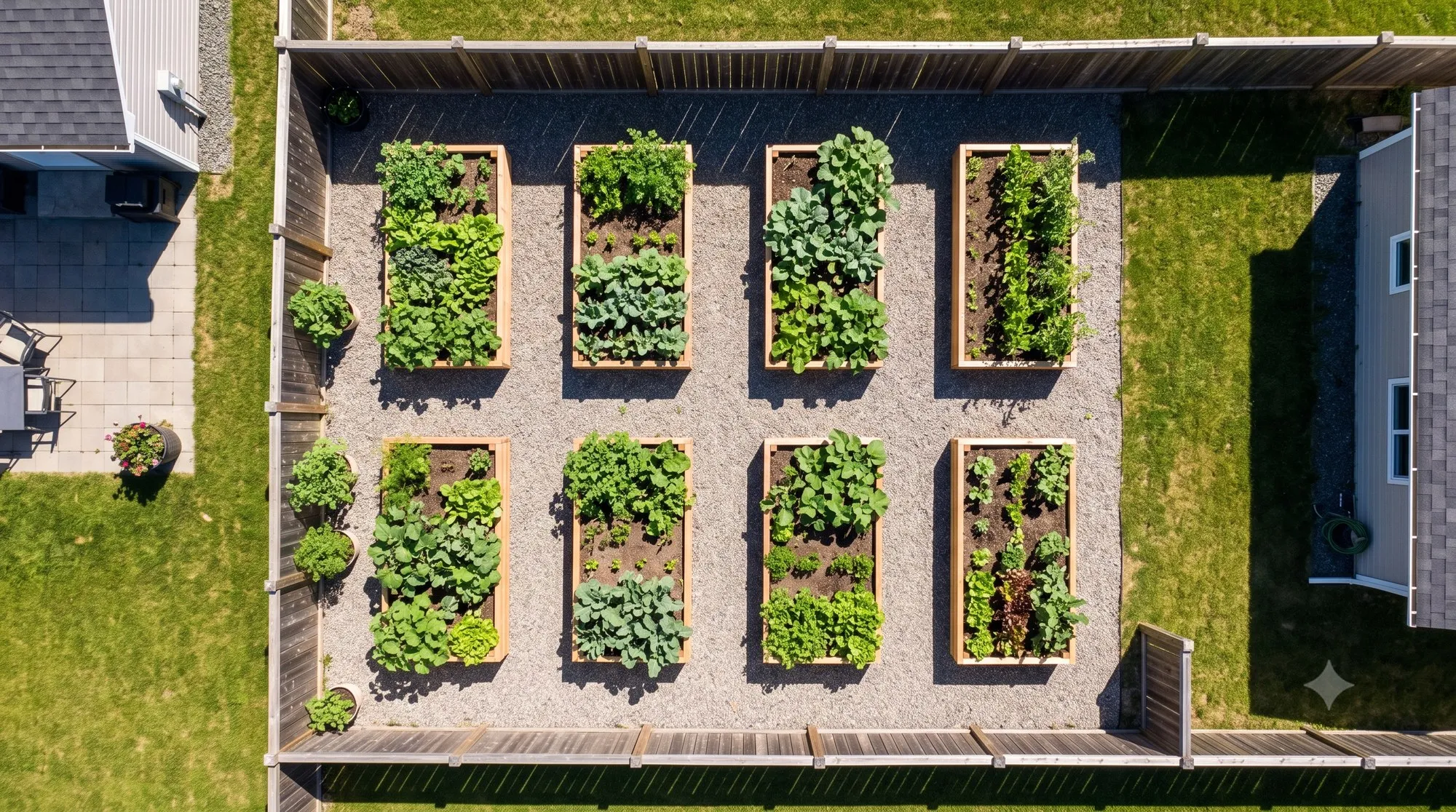
A large property can absorb a badly planned garden — there’s room to just add another bed somewhere else. A small yard can’t; every layout mistake costs you a meaningful share of your total growing space, which is exactly why planning matters more here than the advice aimed at bigger gardens usually accounts for.
Start with sun, not with beds
Map actual sun exposure across your whole yard before sketching a single bed. Track it over a full day if you haven’t already, in at least two seasons if you can manage it — a spot that’s full sun in early spring before deciduous trees leaf out can drop to partial shade by summer, and a layout planned only from a single spring afternoon’s observation will disappoint by July. The sunniest zone should host your highest-light crops (tomatoes, peppers, squash); everything else gets planned around that anchor, not the other way around.
Group by height and orientation
Place taller crops (trellised beans, staked tomatoes, corn) on the north side of the layout so they don’t cast shade over shorter plants during the growing season. This one rule fixes more small-yard shading complaints than any other single layout decision — a garden that reads fine on paper but ignores where shadows fall by midsummer routinely under-produces in its shorter, shaded plants without an obvious cause.
Zone by how often you harvest
Put what you pick constantly — herbs, salad greens, cherry tomatoes — closest to the house or the path you actually walk daily. Put once-a-season or infrequent-harvest crops (winter squash, a single row of potatoes) further out. This isn’t just convenience: crops near daily foot traffic get checked on more often, which means problems (pests, under-watering, ready-to-pick produce going overripe) get caught sooner.
Leave real paths, not gaps
A small yard tempts you to skip dedicated paths to squeeze in a few more plants, and it’s almost always the wrong trade. Without at least 18 inches of path between growing areas, maintenance becomes a reach-over chore you’ll do less often, and less frequent attention costs more productivity over a season than the path’s footprint would have. Plan paths first, fit beds into what’s left — not the reverse.
Rotate crop families year to year
Even a small layout benefits from simple crop rotation — don’t plant tomatoes, peppers, or eggplant (all nightshades, sharing the same pest and disease vulnerabilities) in the same bed two years running. In a small yard with limited bed count, this can mean rotating between just two or three zones rather than a large multi-bed rotation, but even that modest rotation meaningfully reduces the buildup of soil-borne pests and disease that repeated same-family planting causes.
Sketch it before you build anything
Draw the layout to scale on paper (or a simple digital sketch) before building a single bed or buying a single plant. It’s a lot cheaper to erase and redraw a bed placement than to rebuild one after realizing it shades its neighbor or blocks the path you actually need to walk.
Leave room for what a plant becomes, not what it starts as
A layout planned around seedlings and young transplants routinely crowds itself by midsummer, since spacing guidance on a seed packet assumes the plant’s mature size, not its size on planting day. Space to the mature spread even though the bed looks sparse and half-empty for the first few weeks — a small yard tempts you to fill every visible gap, and that instinct is what produces the overcrowded, poorly-airflowing beds that struggle with disease by midsummer. If you want the layout to look fuller early on, fill temporary gaps with a fast, shallow-rooted crop like radishes or lettuce that you’ll harvest and clear out before the main crop needs the space.
Locating underground utilities before digging
Before building any permanent bed, especially one requiring digging deeper than a few inches, check for buried utility lines — many regions offer a free utility-locating service you can call before digging, regardless of how established the yard looks. This matters more in a small yard than a large one specifically because small properties concentrate utility runs (water, gas, buried electrical) into a much smaller area, so the odds of a planned bed sitting directly over something are higher than the footprint alone would suggest.
A simple worked layout for a typical small yard
For a roughly 15-by-20-foot yard with one clearly sunny side: place two 4-by-8 raised beds along the sunniest boundary, oriented so their long side runs east-west (this keeps taller plants within a bed from shading their own shorter neighbors as the sun moves through the day). Leave a 3-foot path between the two beds and along any side you’ll regularly access with a wheelbarrow or hose reel. Use the remaining shadier side for a compost bin, tool storage, or shade-tolerant plantings that would underperform in the sunny beds anyway — a small yard rewards making every zone earn its keep rather than leaving the non-ideal areas as unused lawn.