 PickySprout
Starting a Raised Bed in a Small Yard
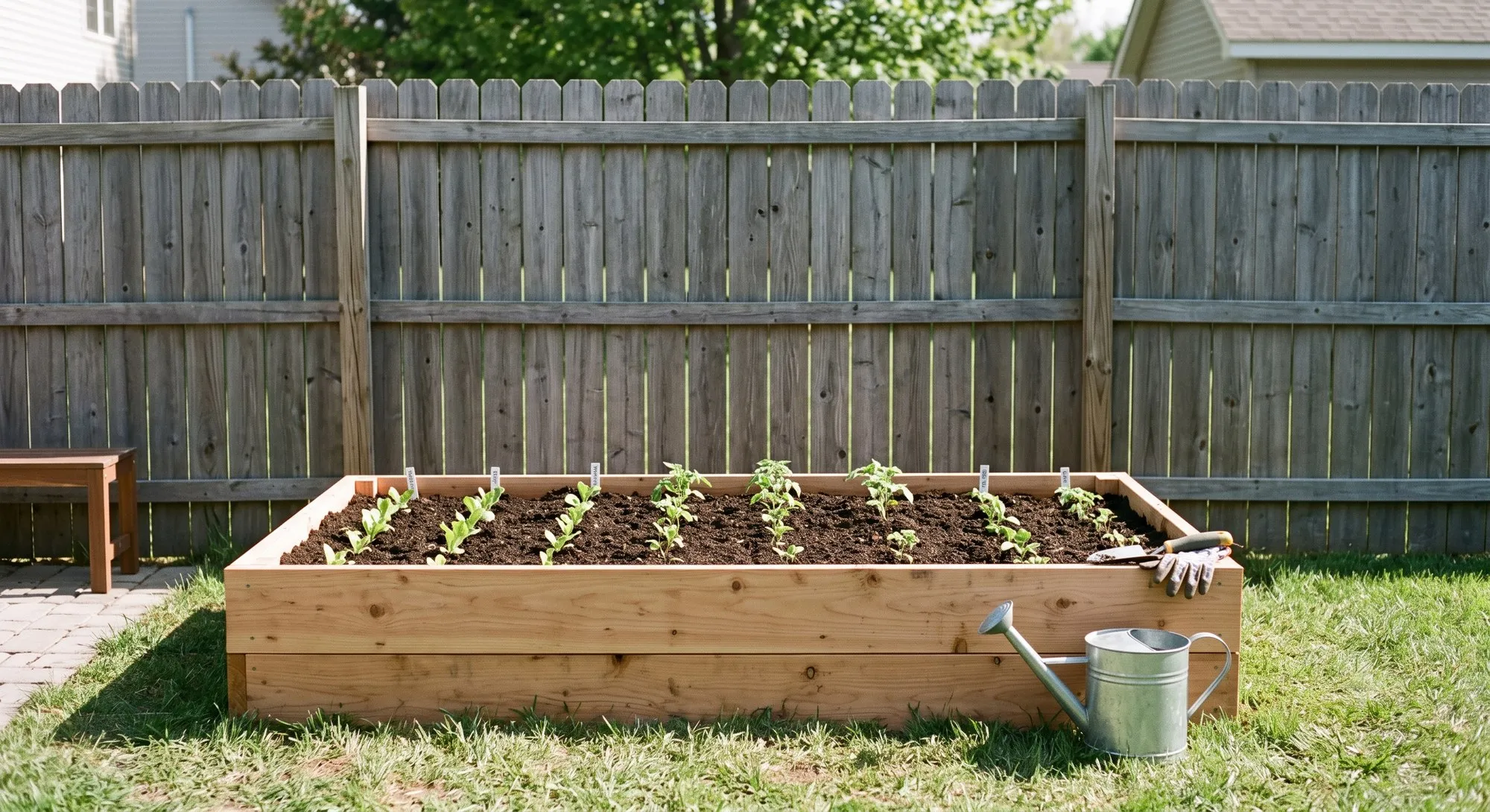
A small yard doesn’t need a sprawling garden to be productive. One well-placed raised bed, sized to the space you actually have, usually outperforms a bigger bed nobody has time to maintain — and a small yard in particular punishes an oversized bed harder than a large property would, since there’s no slack space left over once it’s built.
Sizing the bed
- Keep width to 4 feet or less so you can reach the center from either side without stepping into the bed — soil you walk on compacts, and compacted soil is harder for roots to push through
- Length can flex to fit the space — a narrow bed along a fence line works well and makes good use of an edge that’s otherwise dead space
- Leave at least 18 inches of path around the bed for comfortable access; anything narrower turns routine maintenance into an awkward squeeze, and you’ll do it less often as a result
- Height is a comfort choice as much as a growing one — 12 inches is enough soil depth for most vegetables, but 18-24 inches saves your back if kneeling isn’t appealing
Where to put it
Build the bed against your sunniest boundary first, then work out the path and remaining lawn space around it — starting from the sun, not the layout, gets better results. Most small yards have one obviously sunnier side (usually south- or west-facing, away from the house’s own shadow), and it’s tempting to instead start from an aesthetic layout and hope the sun cooperates. It rarely does. Track sun across a full day before committing to a spot if you’re not already sure which side of the yard gets the most consistent light.
Building vs. buying
A basic rectangular raised bed is one of the more forgiving DIY builds — untreated cedar or pine boards, simple corner brackets, no complex joinery required. But if carpentry isn’t something you want to take on, a pre-made kit removes the guesswork on materials and sizing, at a real cost premium. Either route works; the sizing and placement advice above matters more than which one you pick.
Filling it right
Don’t fill a raised bed with garden soil alone — it compacts differently in a contained bed than it does in the ground, and drains poorly as a result. A blended mix of topsoil, compost, and a coarser amendment like perlite or pine bark fines drains and aerates far better, and is worth the extra cost of buying multiple soil types rather than one bag of generic garden soil for the whole bed.
Top off with an inch or two of mulch once planted — it holds moisture between waterings and is especially useful in a small yard bed, which tends to sit in reflected heat from nearby fences or paving more than an open garden bed would.
Choosing the material more carefully
Cedar and redwood resist rot naturally and typically last 10-15 years untreated, at a real price premium over pine. Untreated pine costs less upfront but rots out in as little as 4-6 years in a consistently damp climate — a reasonable tradeoff if you’d rather rebuild cheaply on a shorter cycle than pay more once. Avoid old-style pressure-treated lumber that used chromated copper arsenate (CCA); modern pressure-treated wood sold for residential use switched to less toxic preservatives, but if you’re ever unsure of a board’s age or treatment type, it’s not worth the risk in a bed growing food — untreated wood or a plastic/composite liner between soil and any treated lumber sidesteps the question entirely. Galvanized metal beds are increasingly common, last decades, and heat up faster in direct sun than wood — worth knowing if your sunniest spot is also your hottest, since soil against a hot metal wall can stress roots along the edges more than a wood-walled bed would.
Should you line it?
A cardboard or landscape-fabric liner along the bottom is useful for suppressing existing grass or weeds when building over lawn, but skip lining the sides — a fully lined bed can trap excess moisture against the wood and shorten its life, and it blocks the beneficial soil life (earthworms, microbes) that naturally moves between a raised bed and the ground underneath, which matters for long-term soil health more than the tidiness a full liner suggests.
Maintaining the bed over its lifespan
Soil in a raised bed settles and compacts over each season, so top off with an inch or two of fresh compost every year rather than waiting until volume has visibly dropped — a bed that’s noticeably lower than when it was built has already lost some of its growing depth for a season before you notice. Check corner joints and any wood-to-wood connections each spring; a loose corner bracket caught early is a five-minute fix, while one left to worsen under a full season’s soil weight can eventually blow out a whole side of the bed.
What to expect the first season
A brand-new raised bed, even filled with a good blended mix, tends to settle noticeably within the first few months as the loosely packed soil compacts under watering and its own weight — don’t be surprised if the fill line drops an inch or two by midsummer, and plan to top it off rather than treating the initial fill as a one-time job. First-season yields in a new bed are also commonly a bit lower than what the same bed produces in its second and third years, simply because the soil biology (beneficial fungi, bacteria, and organic matter breakdown) that makes a bed genuinely productive takes a season or two to establish, even when the physical mix is right from day one.