 PickySprout
How to Fix Poor Soil in a Small Yard Garden
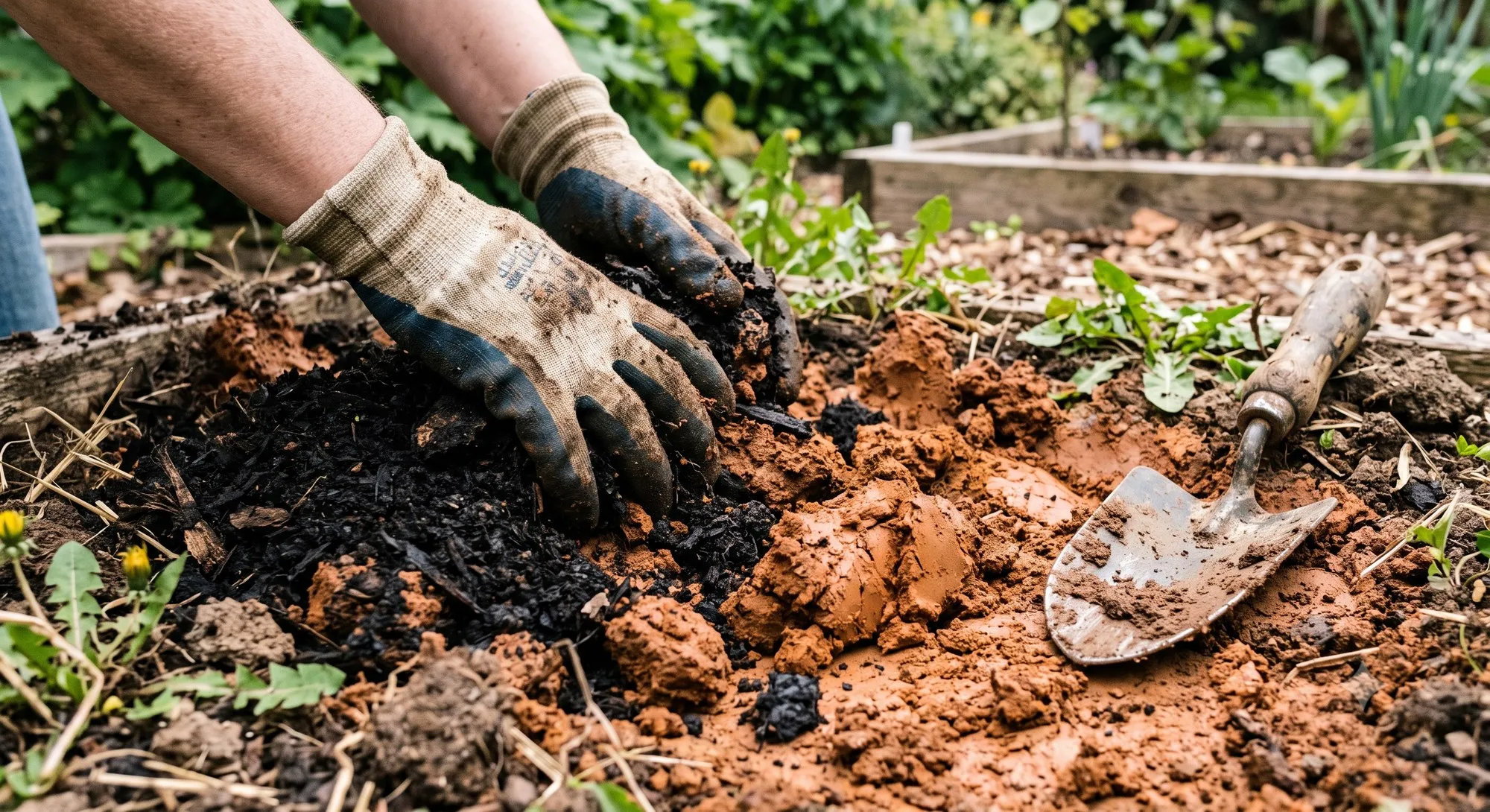
Small yards, especially around newer or renovated homes, often have some of the worst native soil a gardener will encounter — construction grading strips topsoil and leaves compacted subsoil or fill behind, and a small patch that’s been walked on for years compacts further with no room to rotate which section gets used. The good news: small-yard soil problems are also some of the most fixable, precisely because the area needing correction is small enough to actually amend properly rather than needing a field-scale fix.
Diagnosing what’s actually wrong
Before amending anything, figure out which problem you have — the fix is different for each:
- Compaction — water pools on the surface instead of soaking in, and a garden fork meets real resistance a few inches down. Common in any area that’s been walked on or had equipment driven over it
- Heavy clay — soil forms a sticky ball when squeezed wet and holds its shape rather than crumbling; drains slowly and stays waterlogged after rain
- Poor, sandy fill — water drains through almost instantly and plants show nutrient deficiency symptoms (yellowing, stunted growth) despite regular feeding, since nutrients wash straight through
- Low organic matter — soil looks pale, dusty, and lifeless even when it’s not compacted or overly sandy; a simple visual test more than a texture one
A simple jar test tells you a lot: fill a clear jar about a third with soil, top with water, shake, and let it settle overnight. The layers that separate out (sand at the bottom, then silt, then clay on top) show you your soil’s actual composition rather than a guess.
Fixing compaction
Double-digging (turning soil to two spade-depths, working organic matter into both) is the most thorough fix for a small area, though genuinely labor-intensive. A less physically demanding alternative for a bed you’re not planting immediately: cover with a thick layer of cardboard and mulch or compost, and let it sit for a season — earthworms and soil biology do a meaningful share of the decompaction work over time without you turning a single shovelful.
Fixing heavy clay
Work in generous amounts of compost and coarse organic matter (aged bark, leaf mold) — not sand, which is a common but bad piece of advice; mixing sand into clay without enough other amendment can produce something closer to concrete than improved soil. Raised beds are also a legitimate shortcut here: building up rather than digging down sidesteps difficult clay entirely for the area directly under the bed.
Fixing sandy, poor fill
Compost is again the fix, but the goal here is water and nutrient retention rather than drainage — work in as much organic matter as practical, and consider a slower-release organic fertilizer that won’t simply wash through the way a fast-release synthetic one will in loose, fast-draining soil.
The one fix that works for almost everything
Across nearly every soil problem above, compost is doing most of the real work — it improves clay’s drainage, sandy soil’s water retention, and compacted soil’s structure all at once. If you fix nothing else, working several inches of good compost into a small yard’s growing area before the first planting addresses more problems at once than any single-purpose amendment will.
Checking pH before you assume nutrients are the problem
Symptoms that look like a nutrient deficiency — yellowing, stunted growth, poor fruiting — are just as often a pH problem, since most vegetables can’t access nutrients that are technically present in soil that’s too acidic or too alkaline for their roots to absorb them. A cheap home pH test kit or test strips give a rough reading; anything outside roughly 6.0-7.0 for most vegetables is worth correcting before adding more fertilizer, since feeding a plant that can’t absorb what’s already there just wastes the fertilizer. Garden lime raises pH (corrects acidic soil), elemental sulfur lowers it (corrects alkaline soil) — both work slowly over weeks to months, so test and amend well before a season starts rather than expecting a quick mid-season fix.
When it’s faster to just build up instead of digging down
If native soil is severely compacted fill, contaminated construction debris, or so far off from workable that a jar test barely separates into recognizable layers, amending in place can take multiple seasons to reach truly good structure. A raised bed sidesteps the problem entirely by building 12-18 inches of good soil on top rather than fixing what’s underneath — worth strongly considering if a soil test reveals genuinely poor native ground, since the labor and amendment cost of building a bed is often lower than the multi-season effort of reclaiming badly degraded soil in place.
How long a soil fix actually takes
Compaction and structure issues respond within a single season of consistent amending — you’ll see a visible difference in drainage and workability by the following spring. Building genuinely rich, high organic-matter soil takes longer: expect two to three seasons of adding compost and organic matter before soil that started poor performs like soil that’s been cultivated for years. Treat the first season as a foundation-laying one rather than expecting a single amendment pass to fully transform difficult native soil.