 PickySprout
Vertical Gardening Ideas for Small Yards
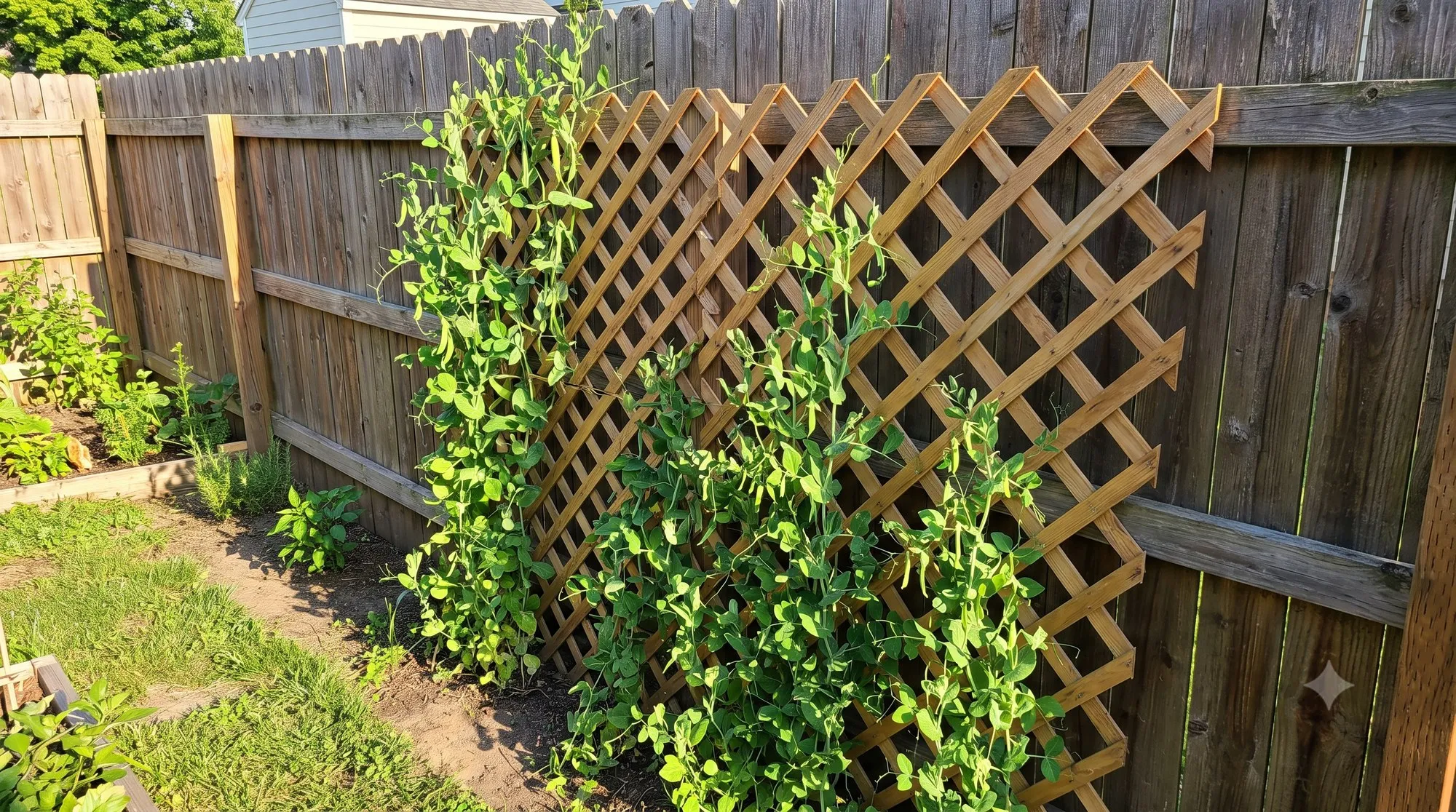
A small yard’s real constraint is usually ground footprint, not total growing potential — and vertical gardening is the most direct way to grow more without needing more ground. Fences, walls, and even the space above an existing raised bed are square footage most small-yard gardeners never count, and it’s often more total growing area than the remaining lawn itself.
Plants that actually want to climb
Not everything benefits equally from being trained vertical — pick crops that climb naturally rather than fighting a sprawling plant into an unnatural shape:
- Pole beans — genuinely bred to climb, high yield per square foot of ground footprint, and one of the easiest vertical crops for a first attempt
- Cucumbers — trained vertical, fruit hangs straighter and stays cleaner than sprawled on the ground, with the side benefit of better airflow reducing powdery mildew
- Peas — lighter climbers, good for an early-season trellis before summer crops take over the same structure
- Indeterminate tomatoes — not a natural climber, but respond well to a sturdy vertical stake or cage system that takes them well off the ground
- Squash and melons — can be trained vertical with support, but the fruit itself often needs a sling (a piece of fabric or netting tied to the trellis) to keep its weight from tearing the vine
Structures that fit a small yard
- A trellis against a fence line makes double use of a boundary that’s otherwise just a backdrop — cheap to build with wood strips or ready-made lattice panels
- A-frame trellises straddle a bed and provide climbing surface on both sides at once, doubling the growing area of a single footprint — well suited to cucumbers and beans
- Cattle panel arches bent into a tunnel shape over a path make an eye-catching, high-capacity structure and turn the path itself into usable growing space overhead
- Wall-mounted planter pockets work for shallow-rooted crops like strawberries or lettuce where you want vertical space but the plant itself isn’t a climber
Building the structure to actually hold the load
A trellis needs to survive a mature plant’s full weight plus wind loading, not just support a seedling — undersizing this is the most common vertical-gardening mistake. Anchor posts at least a foot into the ground (or into a solid fence structure), and size the trellis to the mature plant, not the seedling it’s holding today. A flimsy trellis that collapses under a loaded cucumber vine in August costs more time to fix than building a sturdier one from the start would have taken.
Training as you go
Vertical crops mostly need help getting started, then largely take over climbing on their own — but check in weekly during active growth. Guide new growth toward the structure with soft ties or clips rather than letting the plant sprawl and then correcting it later, since a vine that’s been left to flop and re-directed tends to develop kinks and weak points at the bend.
Soil depth still matters at the base
A trellis solves the space problem above ground, but the roots powering a heavily-loaded climbing plant still need real soil volume at the base — a common mistake is treating a vertical structure as a substitute for adequate soil, then wondering why a fully-trellised cucumber vine underperforms. Plant vertical crops in the same soil depth and volume you’d use for a bush variety of the same plant grown without support; the trellis changes where the plant grows, not how much root space it needs to support that growth.
Watering trained plants
Plants trained vertically catch more sun and wind exposure than the same plant sprawled at ground level, since there’s no surrounding foliage or soil shading the root zone — expect a trellised planting to dry out faster than you’d predict from ground-level experience with the same crop, and check soil moisture at the base specifically rather than assuming a lush-looking vine overhead means the roots are fine. Mulching heavily at the base helps offset this increased evaporation.
Off-season teardown and storage
Annual vertical crops (beans, cucumbers, most squash) finish for the season well before a wood or metal trellis structure needs to. Cut spent vines back to the base rather than trying to strip them off the structure whole — dried vine material grips lattice and mesh tightly enough that pulling it can loosen or damage the structure itself. Wooden trellises last longest if stored somewhere dry over winter rather than left outside through wet months they’re not actively supporting a crop for; metal cattle-panel arches can typically stay in place year-round with little issue, which is one more reason they’re a good match for a small yard where storage space for a large seasonal structure is scarce.
Using the ground at the base of a trellis
The strip of soil directly beneath a vertical structure is easy to overlook once the climbing crop is established, but it’s still usable growing space in its own right. Shallow-rooted, shade-tolerant plants — lettuce, spinach, low-growing herbs — do well tucked at the base of a bean or cucumber trellis, since they benefit from the afternoon shade the climbing foliage above eventually casts. Just avoid anything with competing deep roots or heavy nutrient needs in that same strip; the climbing crop’s own root system usually claims most of that soil volume by midseason.