 PickySprout
Growing Fresh Herbs on a Windowsill Year-Round
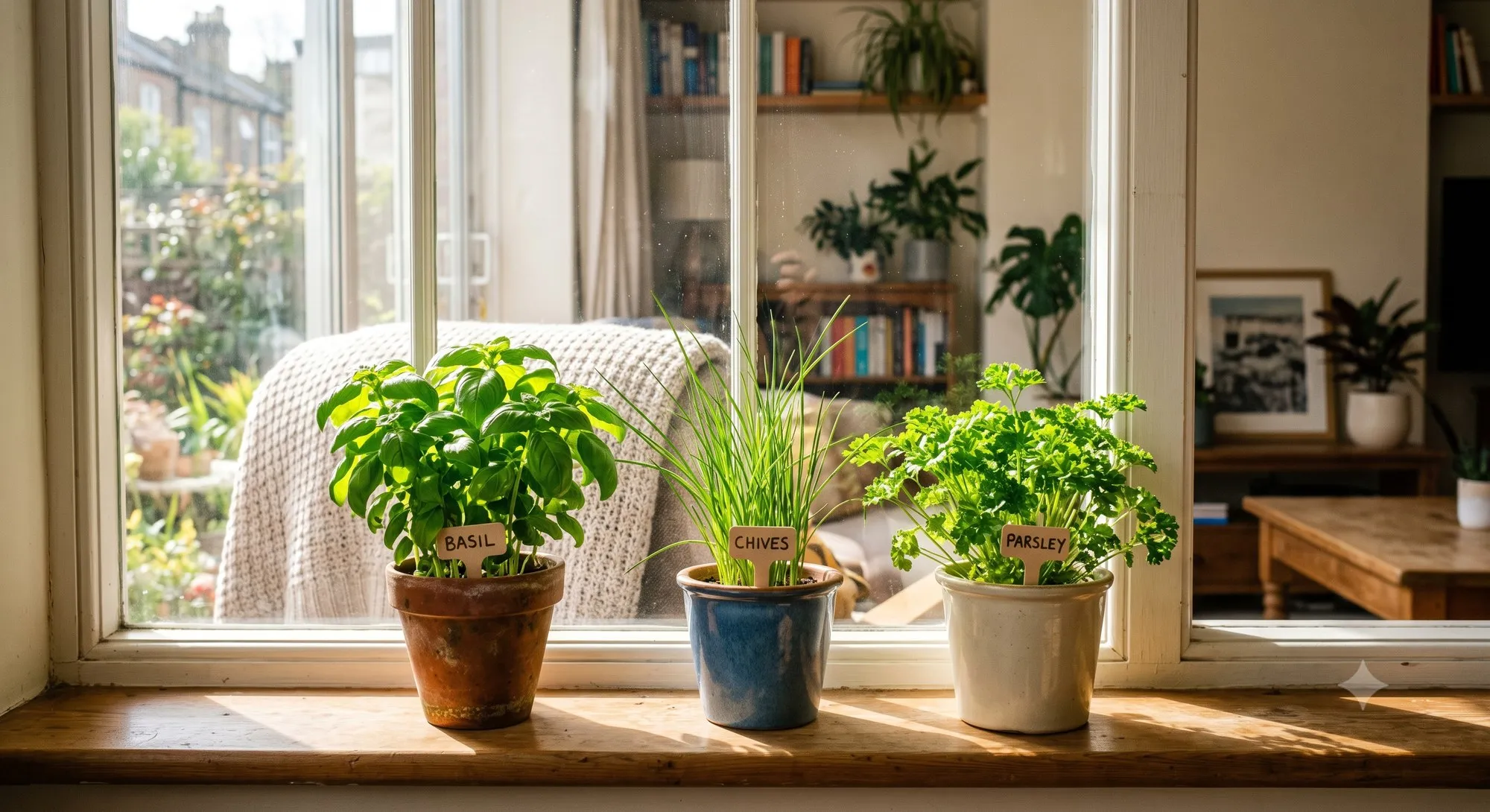
A south-facing windowsill can support a small herb garden through winter, but most windowsills — even bright-looking ones — don’t provide enough light for strong growth once the days get short. This is the single biggest gap between what people expect from “a sunny window” and what the plant actually receives, and it’s the reason so many windowsill herb gardens do fine in summer and quietly fade by December.
Picking a window
- South-facing windows get the most consistent light in most Northern Hemisphere climates, and are the safest default if you only have one good option
- West-facing windows run a close second, with strong afternoon light
- East-facing windows work for lower-light herbs like mint and parsley, but basil and rosemary will stretch and thin out over winter in east-only light
- Avoid windows with cold drafts in winter — herbs don’t like sudden temperature swings, and a windowsill that’s warm during the day and drops sharply at night stresses roots even if the light is good
Reading the signs your herbs are struggling
If your herbs start stretching and leaning hard toward the glass, that’s a sign they’re not getting enough light and would benefit from a supplemental grow light rather than a different watering routine — leaning toward light (phototropism) is specifically a light problem, and no amount of fertilizer or water adjustment fixes it. Leggy growth with long gaps between leaves is the same signal in a different form.
Adjusting through the seasons
Windowsill herbs don’t need the same routine year-round, and treating winter like summer is a common way to lose a plant that was thriving three months earlier.
- Water less in winter. Growth slows with the shorter days, and soil that stayed appropriately moist in July will hold water far longer in January at the same watering frequency — check before you water rather than sticking to a fixed schedule
- Stop fertilizing in deep winter, then resume light feeding once daylight starts noticeably increasing again in late winter
- Rotate the pot a quarter turn weekly so growth doesn’t end up permanently lopsided from reaching toward one side
- Watch for dry indoor air from heating systems, which stresses herbs in a different way than outdoor cold does — a light misting or a pebble tray with water underneath the pot helps offset it
Herbs that handle low winter light best
Mint, chives, and parsley tolerate a dimmer winter windowsill better than most. Basil and rosemary are the two most likely to sulk once daylight drops — if you’re only keeping one herb going through winter without a grow light, one of the shade-tolerant three is the safer bet.
Pots, drainage, and soil for indoor conditions
Indoor herb pots need drainage holes just as much as outdoor containers do, but with less margin for error — a saucer that holds standing water sits right on a windowsill or shelf with no air circulation underneath to help it evaporate, so water pools and roots sit wet far longer indoors than the same mistake would cause outside. Empty saucers after watering rather than leaving standing water “for later,” and use a well-draining potting mix rather than garden soil, which compacts and drains poorly in a small indoor container. Terracotta pots are especially useful indoors for exactly this reason — the porous material wicks excess moisture out through the pot wall itself, giving you a buffer against overwatering that a glazed or plastic pot doesn’t provide.
Common indoor pest problems
Fungus gnats are the herb-garden pest most specific to indoor growing — small, mosquito-like flies that breed in consistently damp topsoil. They rarely damage mature herbs seriously but are an unmistakable sign watering is too frequent; let the top inch of soil dry out between waterings and the population drops off within a couple of weeks without needing any treatment. Spider mites are the other common indoor problem, especially in the dry air heated homes produce in winter — fine webbing and stippled, dusty leaves are the giveaway. A occasional misting or a pebble tray under the pot raises humidity enough to make conditions less favorable for them.
Knowing when to restart rather than nurse a plant back
A leggy, thin, mostly-bare stem with just a few small leaves at the tip has usually passed the point where better light and care bring it back to a full, bushy plant within a reasonable timeframe — the plant has put its limited energy into stretching rather than building the branching structure that makes a full herb plant. Rather than spending weeks nursing a badly leggy basil or rosemary, cut it back hard (it may recover) or simply start a new one under corrected conditions (a better window, or a grow light) — a fresh start under the right light often reaches usable size faster than rehabilitating a badly stretched plant does.
Repotting root-bound windowsill herbs
Roots circling the inside of the pot, or growing out through the drainage holes, mean a plant has outgrown its container and needs repotting even if the top growth still looks fine for now — a root-bound plant will start showing stress above soil within weeks regardless of how well you water and feed it, since there’s simply no more room for roots to take up what they need. Move up one pot size, not several; a small plant dropped into an oversized pot sits in more soil volume than its roots can use, which stays wet longer and raises the risk of root rot rather than helping the plant grow faster.