 PickySprout
Best Large Planters for Big Indoor Plants
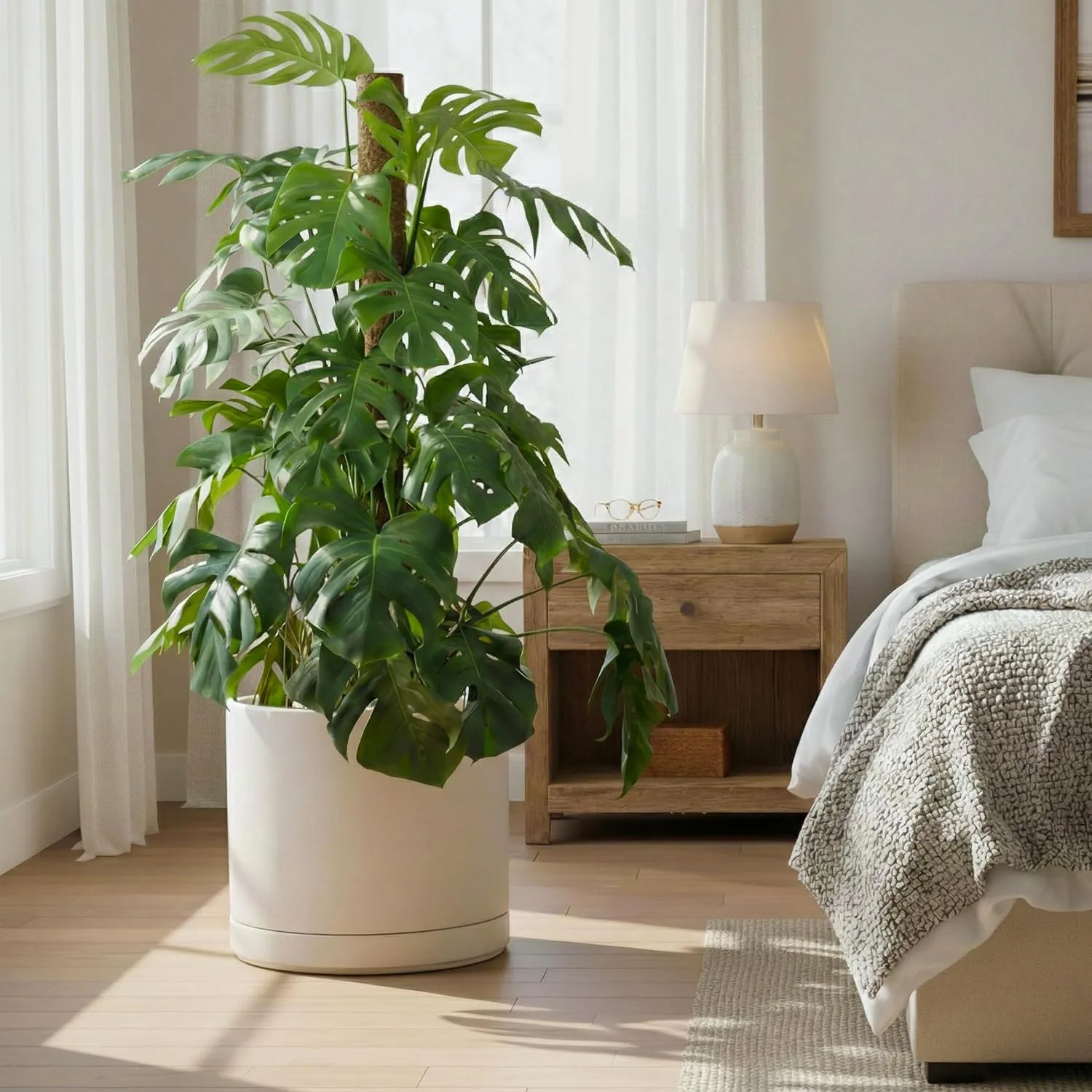
Large houseplants — a monstera, a fiddle-leaf fig, a rubber plant — outgrow their nursery pots fast, and repotting into something only a little bigger just means repeating the process every few months. A properly-sized floor planter gives the roots room to establish and cuts down on how often you need to repot, while doing double duty as a piece of furniture in the room.
What we looked for
- At least 15 gallons of soil volume for a full-size floor plant; anything smaller and you’re back to repotting within a year
- A drainage hole plus a saucer or drip tray — pots without drainage are one of the most common causes of indoor root rot, and a saucer protects hardwood or laminate flooring underneath
- A glazed or sealed finish that won’t leave water rings or absorb moisture into the material itself, which matters more indoors than outdoors since a damp planter base sitting on flooring for weeks is a bigger problem than one sitting on a patio slab
- A neutral finish or enough visual weight to work as a piece of furniture in a bedroom or living room, not just a plant container
Our pick: 16-Inch Ceramic Floor Planter
For a full-size indoor plant, look for a glazed ceramic cylinder planter with a built-in drainage hole and a matching saucer. A 16-inch planter is roomy enough for an established monstera, fiddle-leaf fig, or similar floor plant, and a simple neutral glaze — white, cream, matte black — tends to blend into more rooms than a patterned or brightly colored pot.
Two things worth knowing before buying: it’s genuinely heavy even before you fill it with soil, so decide on its final spot before moving it in — you won’t want to relocate it once loaded. And check that a saucer or drip tray is included or available separately; without one, indoor watering means either carrying the plant to a sink or risking water damage to the floor underneath.
Comparing large planter materials
Ceramic holds moisture in the material itself less than unglazed terracotta does, and a glazed finish specifically seals that further, which matters indoors since a planter base that stays damp against flooring for days is a bigger problem inside a home than outside on a patio slab. The tradeoff is weight — a large glazed ceramic planter is genuinely heavy even empty, harder to reposition than the alternatives. Fiberglass and resin planters mimic ceramic’s look at a fraction of the weight and won’t crack if accidentally knocked, at a real cost premium for the better composite materials; cheaper resin can look and feel noticeably plastic up close. Plastic planters are the lightest and least expensive option, practical for a plant you might want to move between rooms or seasons, though most lack the visual weight to double as a furniture piece the way ceramic does.
Sizing for the plant, not just the room
Fifteen gallons of soil volume suits an already-established large houseplant, but sizing up too far ahead of a smaller plant’s current root system can cause more harm than good — soil that’s far in excess of what roots can use stays wet longer after watering, raising root rot risk in exactly the way an undersized pot doesn’t. As a rough guide, size up one planter size at a time as a plant genuinely outgrows its current pot (roots visible at the surface or through drainage holes) rather than jumping straight to the largest floor planter available.
Price tiers
Basic glazed ceramic planters in the 12-14 inch range typically start around $30-40 and suit a medium-established plant. Larger 16-18 inch planters with a matching saucer included run $60-100 depending on finish and glaze quality — unglazed or partially glazed pieces tend toward the lower end, fully glazed designer finishes toward the higher end. Premium hand-thrown or imported ceramic pieces above that price range are paying largely for aesthetics and brand rather than meaningfully better function for the plant itself.
Moving it once it’s placed
Because a filled large planter is genuinely difficult to relocate, consider a plant caddy — a wheeled platform the pot sits on — from the start if there’s any chance you’ll want to rotate the plant for even light exposure or move it seasonally. Adding one after the fact means lifting a fully loaded planter, which is exactly the scenario worth avoiding by planning ahead.