 PickySprout
Best Self-Watering Planters for Windowsill Herbs
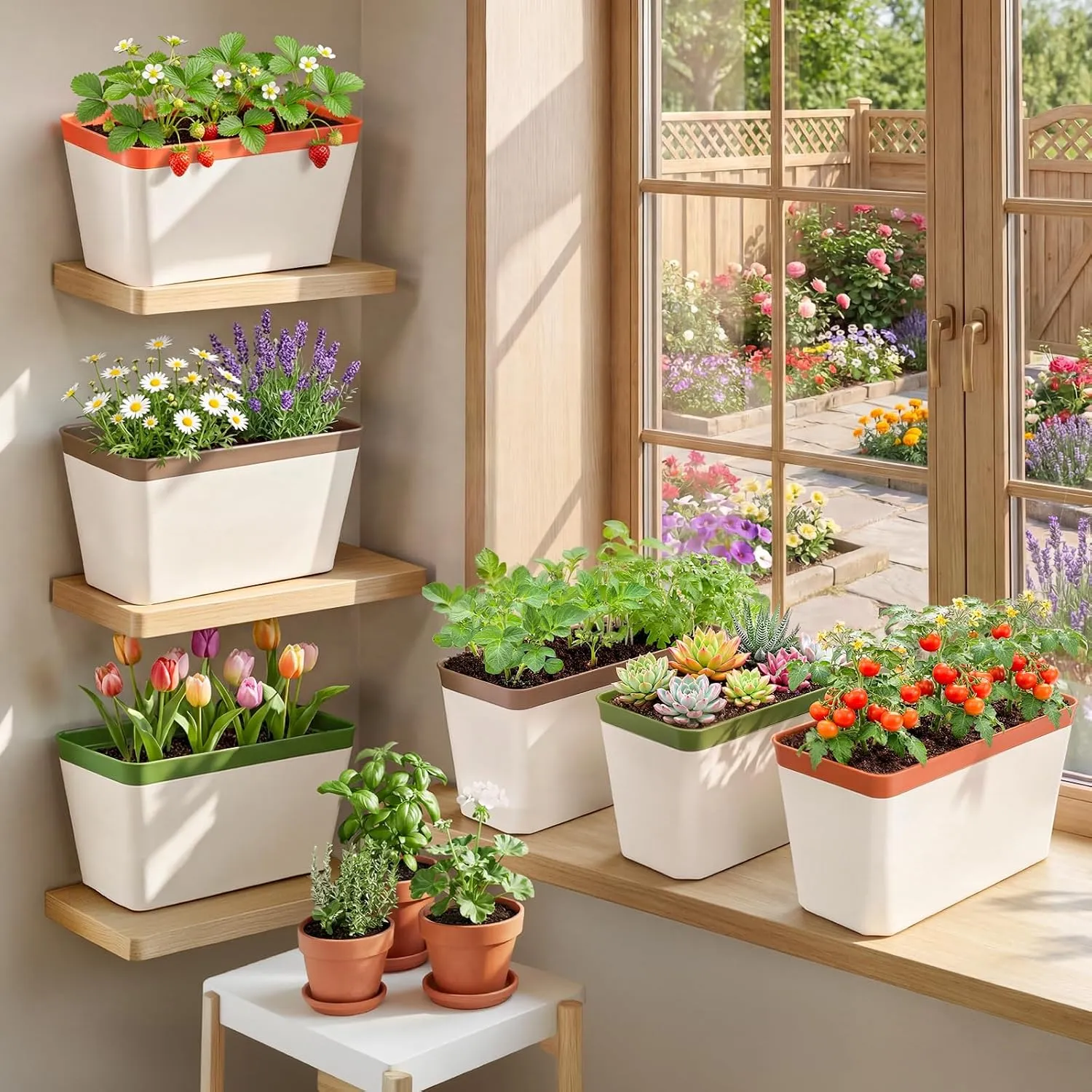
Windowsill herbs fail more often from inconsistent watering than almost any other single cause — small pots dry out fast, and it’s easy to forget a daily check during a busy week. A self-watering planter, which holds a reservoir of water that wicks up into the soil as it dries, doesn’t remove the need to pay attention entirely, but it buys real margin for error and evens out the peaks and valleys that cause most windowsill herb problems.
What we looked for
- A visible or easy-to-check water level indicator — several self-watering designs hide the reservoir entirely, which just moves the guesswork from “is the soil dry” to “is the reservoir empty” instead of solving it
- A wicking system that reaches the full root zone evenly, not just the center of the pot, since uneven wicking can leave the edges of the soil dry even with a full reservoir
- A reservoir sized to actually matter — some compact designs hold so little water that refilling is barely less frequent than watering a standard pot would be
- A footprint that suits a windowsill specifically, not a floor planter scaled down
Our pick: Compact Self-Watering Herb Planter
For windowsill herbs, look for a compact self-watering planter with a visible water-level indicator and a wicking system that reaches the full width of the pot, not just the center — uneven wicking can leave the edges of the soil dry even with a full reservoir. A side-mounted water window makes checking the reservoir a genuine glance rather than a guess, which matters more than raw reservoir size for a small windowsill footprint.
Most compact self-watering planters need refilling roughly once a week under normal indoor conditions — a real improvement over daily checks on a standard pot, and easy to fold into a routine (a Sunday watering day, for instance).
One limitation worth flagging: a self-watering reservoir helps with underwatering, not overwatering — it won’t rescue a plant in a spot with genuinely poor light or airflow, and root rot is still possible if the wicking material stays saturated in a plant that isn’t using water fast enough. It solves the specific, common problem of forgetting to water, not every windowsill growing problem at once.
How wicking systems actually differ
Most compact self-watering planters use one of two designs: a wicking rope or cord that draws water up from the reservoir into the soil, or a false-bottom design where the potting mix itself sits partly in contact with the water reservoir through a perforated divider. Wicking-cord designs tend to distribute moisture more evenly across a wide, shallow planter (better suited to a row of herbs), while false-bottom designs are simpler and more reliable in taller, narrower pots where a single cord would have to wick moisture further than it reliably can.
Price tiers
Basic self-watering inserts that retrofit into an existing pot start under $15 and work reasonably well for a single plant, though most lack a visible water-level indicator, meaning you’re back to guessing when the reservoir needs a refill. Mid-range dedicated planters in the $20-35 range typically add a sight window or float indicator and a wider reservoir footprint. Larger multi-cell trough versions above that price suit a full windowsill herb row rather than a single pot, at a correspondingly larger footprint.
Cleaning and maintenance
Algae growth inside the reservoir is common in a planter that sits in direct sun, since light reaching the water encourages it — a reservoir made of opaque or dark plastic resists this better than a clear one. Empty and rinse the reservoir every month or two even if it isn’t visibly dirty, and check the wicking material for mineral buildup (a white, crusty residue from hard tap water) every few months, replacing it if it’s stiffened enough to slow water uptake.
Who should stick with a standard pot instead
A self-watering planter adds real value for anyone who travels regularly or has a habit of forgetting to water, but it’s an unnecessary extra cost for someone who already waters on a consistent daily schedule and enjoys that routine — a standard pot with a saucer costs less, is simpler to clean, and gives you more direct feedback about how fast a specific plant and spot are actually using water.