 PickySprout
Choosing the Right Spot for a Windowsill Herb Garden
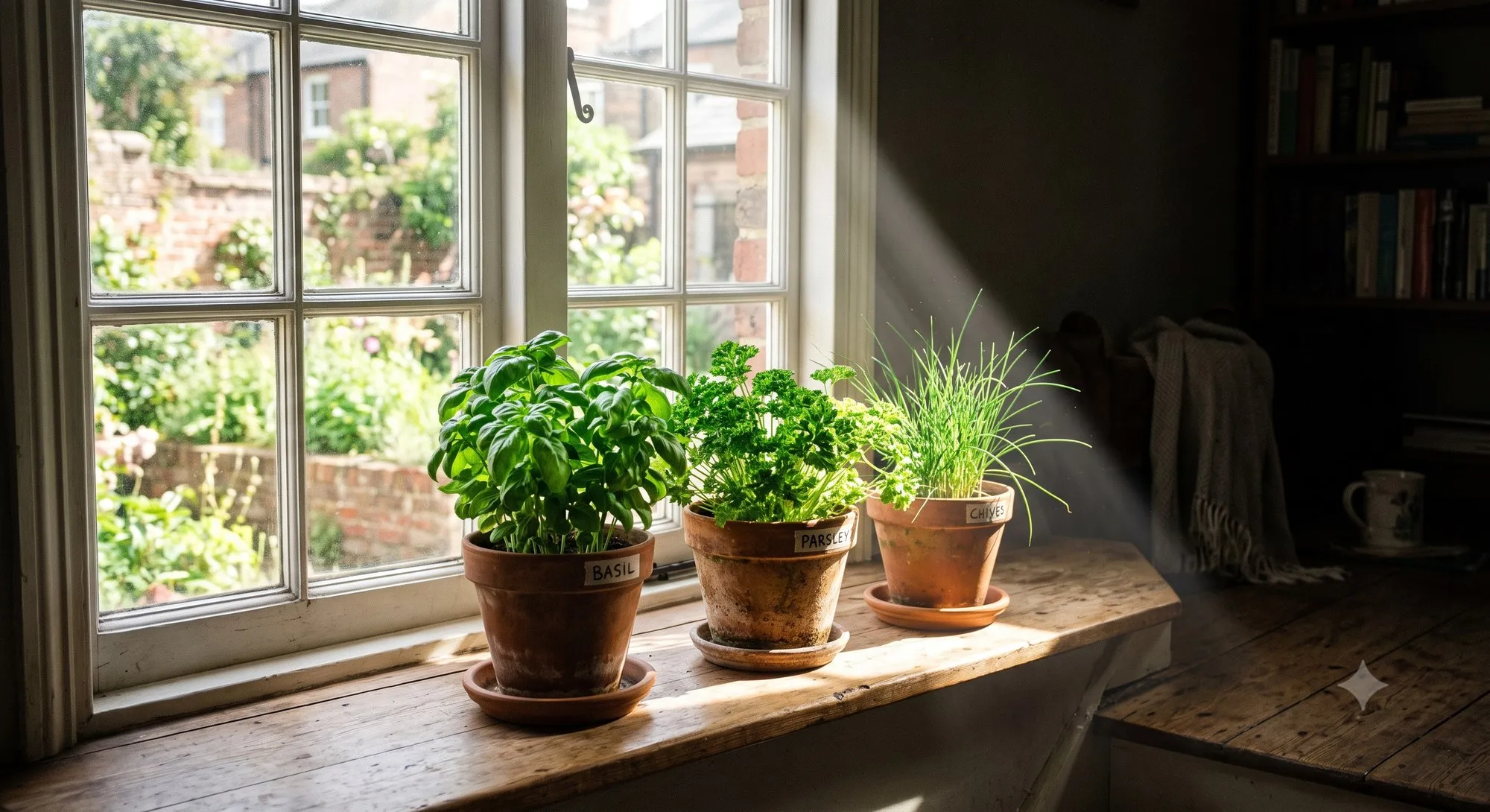
Most windowsill gardening advice starts with which herbs to buy. It should start with which window you have, because no amount of good watering technique compensates for a window that doesn’t provide enough light — and diagnosing a struggling windowsill plant almost always comes back to this one decision made before anything was ever planted.
Reading your window’s orientation
- South-facing (Northern Hemisphere) gets the most light for the longest stretch of the day, and is the safest default for light-hungry herbs like basil and rosemary
- West-facing gets strong, hot afternoon light — good total light, but plants right against the glass can scorch on the hottest summer afternoons, so a few inches of setback from the pane helps
- East-facing gets gentler morning light, enough for mint, parsley, and chives, but usually not enough for basil or rosemary to thrive long-term without supplemental light
- North-facing is the hardest orientation for any herb without a grow light — direct sun rarely reaches a north window at all, and it’s the orientation most likely to disappoint someone assuming “a bright room” is the same thing as “direct sun”
Testing what you actually have
Orientation is a starting guide, not a guarantee — nearby buildings, trees, or an overhang can block light a compass direction alone wouldn’t predict. Before committing to a windowsill garden, track the actual light at that spot across a full day: note when direct sun arrives, how long it lasts, and when it fades into shade. A “south-facing” window that’s shaded by a neighboring building for half the day behaves more like an east-facing one in practice.
Distance from the glass matters more than people expect
Light intensity drops off fast with distance from a window — a pot six inches back can receive meaningfully less light than one right on the sill, and a pot a foot or two into the room may barely register as “bright” at all despite looking well-lit to the eye. If you’re arranging several pots at different depths on a wide sill, expect the ones set back to need either repositioning to rotate into the best spot periodically, or acceptance that they’ll grow slower than the front row.
Seasonal light changes indoors
The same window delivers very different light in December than in June — both because day length shortens and because the sun’s lower winter angle changes how far light reaches into a room. A spot that was plenty bright in summer can become genuinely insufficient by midwinter, which is why many otherwise-healthy windowsill herb gardens decline every winter at the same point, then recover every spring without any change in care routine.
When to stop fighting the window and add light
If you’ve picked the best available window, tracked its real light across a day, and herbs are still stretching or thinning, that’s the signal the window itself has hit its ceiling — a supplemental grow light solves a light problem far more reliably than moving pots around a room ever will.
Squeezing more out of a marginal window
Before adding a grow light, a few free adjustments can meaningfully improve a mediocre window’s output. Clean the glass — a season of dust and grime cuts more light transmission than most people expect, and it’s a five-minute fix with no cost. A light-colored wall or a mirror positioned to bounce window light back onto the plants adds real usable light without adding a fixture; this works especially well for north-facing windows or a pot set back a bit from the glass. Pull back heavy curtains and blinds fully during the day rather than leaving them partially closed for privacy — even a partially drawn sheer curtain cuts a surprising amount of usable light for a plant, more than it looks like to the eye.
Measuring light properly instead of guessing
“Looks bright to me” is an unreliable way to judge whether a spot has enough light for a plant, since the human eye adjusts to and compensates for dim conditions far better than a plant’s photosynthesis does. A free light-meter phone app (measuring in lux) gives a rough but genuinely useful number: most culinary herbs want somewhere in the range of a few thousand lux for several hours a day to grow well, and a spot that reads in the low hundreds despite looking “bright enough” is a spot that will underperform no matter how well you water and feed it. Take readings at a few points across the day, not just once, since a spot can read high at noon and drop off sharply by mid-afternoon.
Rotating plants between windows seasonally
If your home has more than one usable window, don’t assume the best summer window is still the best winter one — a west-facing window that gets scorching, plant-stressing afternoon heat in July can be the most comfortable, best-lit option in December once the sun’s angle is lower and the heat is welcome rather than a problem. Reassess at the start of each season rather than leaving plants in the same spot year-round out of habit; the extra effort of physically moving a few pots twice a year is small compared to the growth difference a better-suited window makes.