 PickySprout
Watering Schedule for an Indoor Herb Windowsill
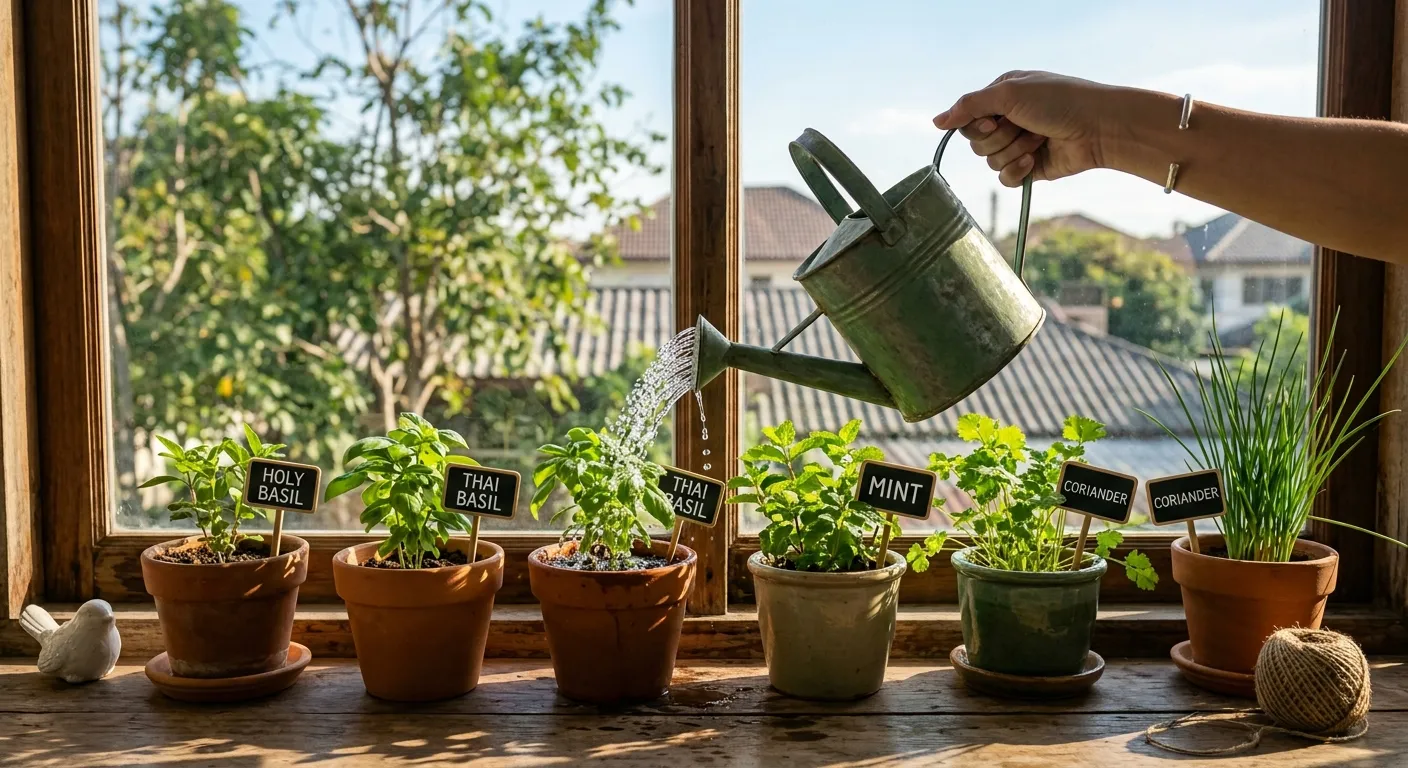
Indoor windowsill herbs die from overwatering far more often than from underwatering — the opposite of the failure mode most balcony and patio containers see. Indoors, there’s no wind or full outdoor sun pulling moisture out of the soil, so a schedule that would be fine outside leaves indoor pots waterlogged.
Check before you water
Stick a finger about an inch into the soil. If it’s still damp, wait — watering on a fixed schedule regardless of actual soil moisture is the single most common cause of indoor herb failure. Pots without drainage holes make this worse, since excess water has nowhere to go and just sits at the bottom rotting the roots; if a decorative pot doesn’t drain, keep the herb in a plain nursery pot with holes and set that inside the decorative one.
How to water once it’s actually dry
Water until it runs out the drainage holes, then let the pot finish draining before setting it back on a saucer or windowsill tray — letting a pot sit in standing water in its saucer defeats the point of drainage holes in the first place.
Adjusting by season
Indoor herbs need noticeably less water in winter, when lower light levels slow growth even though indoor heating can dry out the surface of the soil. Check soil moisture rather than assuming winter heating means more frequent watering — it’s easy to mistake a dry-looking surface for a dry root zone underneath.
A few herb-specific notes
- Rosemary and thyme prefer to dry out noticeably between waterings — treat them more like the “wait longer” end of the range
- Basil and mint want more consistent moisture and will wilt dramatically (though usually recoverably, once) if they dry out completely
- Parsley and chives sit in between — check them on the same finger-test schedule as everything else without leaning either direction